Quotessence
Home / Quotes / Quote by Jan Morris

Quote by Jan Morris

“Sigmund Freud was also frustrated here. In a city that later embraced his ideas with particular zeal, being organically inclined towards neurosis, he himself found only failure. He came to Trieste on the train from Vienna in 1876, commissioned by the Institute of Comparative Anatomy at Vienna University to solve a classically esoteric zoological puzzle: how eels copulated. Specialist as he later became in the human testicle and its influence upon the psyche, Freud diligently set out to discover the elusive reproductive organs whose location had baffled investigators since the time of Aristotle. He did not solve the mystery, but I like to imagine him dissecting his four hundred eels in the institute's zoological station here. Solemn, earnest and bearded I fancy him, rubber-gloved and canvas-aproned, slitting them open one after the other in their slimy multitudes. Night after night I see him peeling off his gloves with a sigh to return to his lonely lodgings, and saying a weary goodnight to the lab assistant left to clear up the mess — "Goodnight, Alfredo", "Goodnight, Herr Doktor. Better luck next time, eh?" But the better luck never came; the young genius returned to Vienna empty-handed, so to speak, but perhaps inspired to think more exactly about the castration complex.”

Quote by Jan Morris

Work

Trieste And The Meaning Of Nowhere

This work delves into the history, culture, and atmosphere of Trieste, a city often perceived as a place of transition and ambiguity. The author examines the city's role in shaping the identity of its inhabitants and its position as a crossroads of Eastern and Western influences. The book provides a nuanced understanding of the city's unique character and its symbolic representation of a place that is neither here nor there, both a destination and a point of departure. more

Author
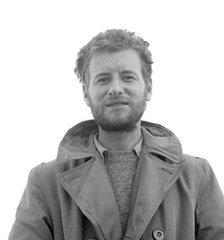
Jan Morris
Jan Morris

Jan Morris is a renowned British historian known for her unique perspective and profound insights. Born on October 2, 1926, she graduated from Oxford University and later became a journalist for the BBC. Morris's works cover a wide range of topics, including history, travel, and literature. Her books, such as 'Venice' and 'Istanbul,' are highly appreciated for their detailed historical content and her distinctive narrative style. more

You May Also Like

“As for the scenes we shared in the Piazza Unita that day in 1897, I can hear the music still, but all the rest is phantom. The last passenger liner sailed long ago. The schooners, steamboats and barges have disappeared. No tram has crossed the piazza for years. The Caffe Flora changed its name to Nazionale when the opportunity arose, and is now defunct. The Governor's Palace is now only the Palace of the Prefect and the Lloyd Austriaco headquarters, having metamorphosed into Lloyd Triestino when the Austrians left, are now government offices: wistfully the marble tritons blow their their horns, regretfully Neptune and Mercury linger upon their entablatures. Those silken and epauletted passengers, with all they represented, have vanished from the face of Europe, and I am left all alone listening to the band.”

“E adesso, vecchio barbagianni, questa fottuta frontiera ti mancherà," (…). Diavolo, pensai, non c’è nessuna ragione per rimpiangere la frontiera. In breve tempo capii. Mi mancava il sogno, la linea d'ombra da valicare, il senso del proibito. La mia prima spinta al viaggio non era nata proprio dall'esistenza della Frontiera?”

“For a few years Trieste once more entered the world’s consciousness, as the Powers argued what to do with it. No longer one of the supreme ports of Europe, it became instead one of those places, like Danzig or Tangier, that have been argued about at international conferences, written about in pamphlets, questioned about in parliamentary debates, less as living cities than as political hypotheses. Winston Churchill, in a famous speech in America, warned the world that an iron curtain had been laid across Europe, dividing democracy and Communism “from Stettin to Trieste.” Abroad the statesmen endlessly parleyed; at home the Triestini of different loyalties, chanting slogans and waving their respective flags, surged about the place rioting. Finally in 1954 the disconsolate and bewildered seaport was given its solution, and Trieste has been what it has been ever since, a geographical and historical anomaly, Italian by sovereignty but in temperament more or less alone.”

“A true suicide is a paced, disciplined certainty. People pontificate, “Suicide is selfishness.” Career churchmen like Pater go a step further and call it a cowardly assault on the living. Oafs argue this specious line for varying reasons: to evade fingers of blame, to impress one’s audience with one’s mental fiber, to vent anger, or just because one lacks the necessary suffering to sympathize. Cowardice is nothing to do with it—suicide takes considerable courage. Japanese have the right idea. No, what’s selfish is to demand another to endure an intolerable existence, just to spare families, friends, and enemies a bit of soul-searching. The only selfishness lies in ruining strangers’ days by forcing ’em to witness a grotesqueness. So I’ll make a thick turban from several towels to muffle the shot and soak up the blood, and do it in the bathtub, so it shouldn’t stain any carpets. Last night I left a letter under the manager’s day-office door—he’ll find it at eight A.M. tomorrow—informing him of the change in my existential status, so with luck an innocent chambermaid will be spared an unpleasant surprise. See, I do think of the little people”