Quotessence
Home / Quotes / Quote by Edith Wharton

Quote by Edith Wharton

Work

The House of Mirth

Edith Wharton's classic novel delves into the complexities of high society, following the life of Lily Bart, a young woman who navigates the intricate web of relationships and expectations in the Gilded Age. The story is rich in detail, offering a critical examination of the era's values and the limitations placed on women. more
Author

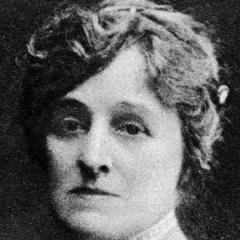
Edith Wharton
Edith Wharton

American novelist known for her delicate psychological portrayals and profound social insights. Edith Wharton came from a wealthy New York family and her works mainly reflect the American society at the end of the 19th century and the beginning of the 20th century. Her representative works include 'The Age of Innocence' and 'The House of Mirth' among others. more

You May Also Like

“First, the idea of the multiverse is essentially the fantasy of preserving perfect information. One of the hard things to deal with in life is the fact that you destroy potential information whenever you make a decision. You could even say that's essentially what regret is: a profound problem of incomplete information. If you select one thing on a diner's menu, you can't know what it would have been like to taste other things on it, right then, right there. When you marry one person, you give up the possibility of knowing what it would have been like to have married any number of others. But if the multiverse exists, you can at least imagine there's another version of you who's eating that other thing you thought about ordering, or who's married to that other man you only went on two dates with. Even if you'll never see all the information for yourself, at least you'll be able to tell yourself that it's there. 'The second reason the multiverse seems like such a neat idea is that it gives human beings just an incredible amount of agency, which they can exercise with the least effort. Why, Carson here created an entire alternate universe when he ordered hash browns on the side of his French toast instead of bacon—' 'Ah, I should have gotten bacon, how could I forget,' Carson said, and attempted to hail the waitress. 'But the history of science shows that any theory that covertly panders to the human ego like that, that puts humans at the center of things, is very likely to be found out wrong, given enough time. So, just for the sake of argument, let's assume that there's just this one universe, and we're stuck with it. What happens to our time traveler then?”

“She could now be sad without losing a jot of hope. Nay, rather, the least approach of sadness would begin at once to wake her hope. She regretted nothing that had come, nothing that had gone. She believed more and more that not anything worth having is ever lost; that even the most evanescent shades of feeling are safe for those who grow after their true nature, toward that for which they were made—in other and higher words, after the will of God.”

“When I arrived at the house in the suburbs that night I seriously contemplated suicide for the first time in my life. But as I thought about it, the idea became exceedingly tiresome, and I finally decided it would be a ludicrous business. I had an inherent dislike of admitting defeat. Moreover, I told myself, there's no need for me to take such decisive action myself, not when I'm surrounded by such a bountiful harvest of death—death in an air raid, death at one's post of duty, death in the military service, death on the battlefield, death from being run over, death from disease—surely my name has already been entered in the list for one of these: a criminal who has been sentenced to death does not commit suicide. No—no matter how I considered, the season was not auspicious for suicide. Instead I was waiting for something to do me the favor of killing me. And this, in the final analysis, is the same as to say that I was waiting for something to do me the favor of keeping me alive.”