Quotessence
Home / Quotes / Quote by Steven Pinker

Quote by Steven Pinker

“If a gene could build a brain that could tell when copies of itself were sitting in another animal's gonads, it would make the brain enjoy the other animal's well-being, and make it act in ways that increased that other animal's well-being.”

Quote by Steven Pinker

Work

How the Mind Works

This book delves into the functioning of the human mind, examining cognitive processes and neural mechanisms from a scientific perspective. more

Author

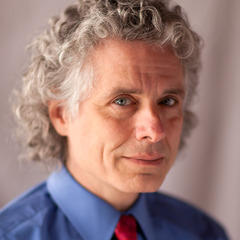
Steven Pinker
Steven Pinker

Steven Pinker is a renowned cognitive psychologist, linguist, and author. His research focuses on language, cognition, and human behavior, particularly the relationship between language and thought. Pinker is known for his in-depth research on the evolution of language and his contributions to the field of cognitive science. more

You May Also Like

“We the experts in cognitive and behavioral sciences can predict human behavior but not human potential. What this means is that, though we can tell how a person is likely to feel, think and behave in a certain situation, we still cannot tell what a person is capable of. Hence the possibilities that a person holds in their neurons are immeasurable.”

“There are endless books about what every third grader must know that use the idea that factual knowledge is the basis of the ability to read as their justification. Unfortunately, the writers of these tracts have misunderstood the cognitive science behind those statements. It is difficult to read things when you don't understand what they are about, but it does not follow from that thatthe solution is to ram that knowledge down kids' throats and then have them read. It is much more clever to have them read about what they know and to gradually increase their knowledge through stories that cause them to have to learn more in order to make the stories understandable to them.”

“In summary, a good teacher does the following: - never tells a student anything that the teacher thinks is true - never allows himself to be the ultimate judge of his own students' success - teacher practice first, theory second (if he must teach theory at all) - does not come up with lists of knowledge that every student must know - doesn't teach anything unless he can easily explain the use of learning it - assigns no homework, unless that homework is to produce something - groups students according to their interests and abilities, not their ages - ensures that any reward to a student is intrinsic - teaches students things they may actually need to know after they leave school - helps students come up with their own explanations when they have made a mistake - never assumes that a student is listening to what he is saying - never assumes that students will do what he asks them to do if what he asked does not relate to a goal they truly hold - never allows pleasing the teacher to be the goal of the student - understands that students won't do what he tells them if they don't understand what is being asked of them - earns the respect of students by demonstrating abilities - motivate students to do better, and does not help them to do better - understands that his job is to get students to do something - understands that experience, not teachers, changes belief systems - confuses students - does not expect credit for good teaching”

“The brain works in a holistic, cooperative way that makes our basest desire or most abject fear as expressive of who we are as abstract thinking of the highest order. That means that we are all equal part snakes, monkeys, and spacemen.”