“From the moment that eternal principles are put in doubt simultaneously with formal virtue, and when every value is discredited, reason will start to act without reference to anything but its own successes. It would like to rule, denying everything that has been and affirming all that is to come. One day it will conquer. Russian Communism, by its violent criticism of every kind of formal virtue, puts the finishing touches to the revolutionary work of the nineteenth century by denying any superior principle. The regicides of the nineteenth century are succeeded by the deicides of the twentieth century, who draw the ultimate conclusions from the logic of rebellion and want to make the earth a kingdom where man is God. The reign of history begins and, identifying himself only with his history, man, unfaithful to his real rebellion, will henceforth devote himself to the nihilistic revolution of the twentieth century, which denies all forms of morality and desperately attempts to achieve the unity of the human race by means of a ruinous series of crimes and wars. The Jacobin Revolution, which tried to institute the religion of virtue in order to establish unity upon it, will be followed by the cynical revolutions, which can be either of the right or of the left and which will try to achieve the unity of the world so as to found, at last, the religion of man. All that was God’s will henceforth be rendered to Cæsar.”
Quote by Albert Camus
Book:The Rebel
Work
Author
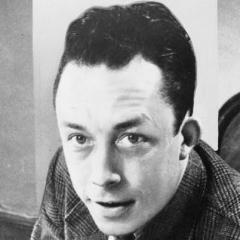
Albert Camus
Albert Camus was a French author and philosopher, born on November 7, 1913, and died on January 4, 1960. Known for his unique existentialist philosophy and profound insights into human suffering, Camus' works include 'The Stranger', 'The Plague', and 'The Myth of Sisyphus', which have had a profound impact on 20th-century literature. more
You May Also Like
“There is a reason why we met. We don't meet anyone by chance!”
Source: Orthodoxy
“Don't find reasons to stay with someone who always finds reasons to leave.”
“It is easier to reason with love than to conquer it”
Source: The Story of the Beauty and the Beast: The Original Classic French Fairytale
Source: Daybreak: Thoughts on the Prejudices of Morality
“Reason is only a drug, and its effects cannot be permanent.”
Source: Lud-in-the-Mist
“Reason and understanding are represented as the voluntary slaves of the senses.”
Source: Lectures on Dramatic Art and Literature
Source: Lectures on Dramatic Art and Literature
Source: Philosophy and Politics: A Commentary on the Preface to Hegel’s Philosophy of Right