Quotessence
Home / Quotes / Quote by Joseph de Maistre

Quote by Joseph de Maistre

“But just let the masters of the world -- princes, kings, emperors, powerful majesties, invincible conquerors -- let them only try to make the people dance on a certain day each year in a set place. This is not much to ask, but I dare swear that they will not succeed, whereas, if the humblest missionary comes to such a spot, he will make himself obeyed two thousand years after his death. Every year the people meet together around a rustic church in the name of St. John, St. Martin, St. Benedict, and so on; they come filled with boisterous yet innocent cheerfulness; religion sanctifies this joy and the joy embellishes religion: they forget their sorrows; at night, they think of the pleasure to come on the same day next year, and this date is stamped on their memory. By the side of this picture put that of the French leaders who have been vested with every power by a shameful Revolution and yet cannot organize a simple fete.”

Quote by Joseph de Maistre

Author
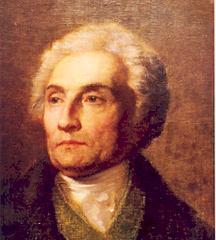
Joseph de Maistre
Joseph de Maistre

Joseph de Maistre was a French philosopher known for his conservative political theories, which had a profound impact on 19th-century European political philosophy. more

You May Also Like

“One form of honesty has always been lacking among founders of religions and their kin:—they have never made their experiences a matter of the intellectual conscience. "What did I really experience? What then took place in me and around me? Was my understanding clear enough? Was my will directly opposed to all deception of the senses, and courageous in its defence against fantastic notions?"—None of them ever asked these questions, nor to this day do any of the good religious people ask them. They have rather a thirst for things which are contrary to reason, and they don't want to have too much difficulty in satisfying this thirst,—so they experience "miracles" and "regenerations," and hear the voices of angels! But we who are different, who are thirsty for reason, want to look as carefully into our experiences as in the case of a scientific experiment, hour by hour, day by day! We ourselves want to be our own experiments, and our own subjects of experiment.”

“No matter how deeply it [a faith based on mere authority] entrenches itself behind authority, no matter how artfully it seeks to ward off all counter-hypotheses and alternative possibilities by assembling a system that covers every conceivable circumstance . . . , reason will still venture to subject it to critical scrutiny. And it will do so spontaneously [aus sich selbst], generating from within itself principles of possibility and plausibility irrespective of any such artificial historical structure predisposed to neglect reason and to claim primacy on historical grounds over the persuasiveness of rational truths.”

“Kiedy sny powtarzają zdarzenia z przeszłości, kiedy ją międlą, zmieniają w obrazy, przesypują przez sita znaczeń, zaczyna mi się wydawać, że przeszłość tak samo jak przyszłość na zawsze pozostanie nieodgadniona i nieznana. To, że coś przeżyłam, wcale nie znaczy, że poznałam tego znaczenie. Dlatego tak samo boję się o przeszłość, jak i o przyszłość. Niechby się okazało, że coś, co znałam i uważałam do tej pory za stałe i pewne, mogło się dziać z zupełnie innej przyczyny i w sposób, jakiego nie podejrzewałam. Że prowadziło mnie ku czemu innemu, a ja nie odkryłam kierunku, że byłam ślepa, że spałam. Co pocznę ze swoim teraz?”