Quotessence
Home / Quotes / Quote by Thomas Jefferson

Quote by Thomas Jefferson

“There must doubtless be an unhappy influence on the manners of our people produced by the existence of slavery among us. The whole commerce between master and slave is a perpetual exercise of the most boisterous passions, the most unremitting despotism on the one part, and degrading submissions on the other.”

Quote by Thomas Jefferson

Work

Notes on the State of Virgina

Browse quotes and source details for this work. more

Author
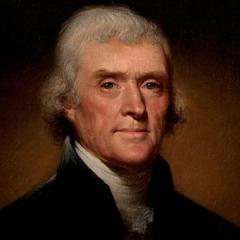
Thomas Jefferson
Thomas Jefferson

Thomas Jefferson was the third President of the United States, a distinguished politician, philosopher, architect, and scientist. He was born on April 13, 1743, and died on July 4, 1826. Jefferson advocated for democracy and freedom in politics and was one of the main authors of the Declaration of Independence. His political ideas had a profound impact on the founding and development of the United States. more

You May Also Like

“I don’t think most people are well informed on the history of voting rights. I don’t think most people are well informed on the concept of democracy even. And that is all intentional. We have, in my view, experienced a generation of deliberate miseducation and historical revisionism around the civil rights movement specifically, around the history of voting rights, around what voting is”

“The oppression and exploitation of Latinos (like Asians) have historical roots unknown to most Americans. People who learn at least a little about Black slavery remain totally ignorant about how the United States seized half of Mexico or how it has colonized Puerto Rico.”

“The Freedom narrative spans from the American Revolution’s origins in the nature of colonial British America—a society in which freedom was limited and in which everyone was the subject of a distant monarch—through the crisis in the British Empire that followed the French and Indian War, to the events of the War for Independence itself, and ultimately to the creation of the first great republic in modern history.”

“Up to 95 percent of the original Native American population, estimated at roughly twenty million people, disappeared after the invasion of European colonizers. While there was direct violence toward Native Americans, many of these deaths can be attributed to the introduction of smallpox. Smallpox is a virus that is spread when one comes into contact with infected bodily fluids or contaminated objects such as clothing or blankets. The virus then finds its way into a person's lymphatic system. Within days of infection, large, painful pustules begin to erupt over the victim's skin. In school curriculums, this has often been taught as an unfortunate tragedy, an accidental side effect of trade, and therefore a reason to claim that the Europeans did not commit genocide. However, in recent years, many historians have recognized that the spreading of smallpox was an early form of biological warfare, one which was understood and used without mercy from at least the mid-1700s. Noted conversations among army officials include letters discussing the idea of "sending the Small Pox among those disaffected tribes" and using "every stratagem to reduce them." Another official, Henry Bouquet, wrote a letter that told his subordinates to "try to Innoculate [sic] the Indians, by means of Blankets, as well as to Try Every other Method, that can serve to Extirpate this Execrable Race." They followed through on their plan, giving two blankets and a handkerchief from a Smallpox Hospital alongside other gifts to seal an agreement of friendship between the local Native tribes and the men at Fort Pitt, located in what is now western Pennsylvania.”