Quotessence
Home / Quotes / Quote by Aldous Huxley

Quote by Aldous Huxley

“Philip was silent. These discussions of personal relations always made him uncomfortable. They threatened his solitude - that solitude which, with a part of his mind, he deplored (for he felt himself cut off from much he would have liked to experience), but in which alone he felt himself free. At ordinary times he took this inward solitude for granted, as one accepts the atmosphere in which one lives. But when it was menaced, he became only too painfully aware of its importance to him; he fought for it, as a choking man fights for air. But it was a fight without violence, a negative battle of retirement and defence.”

Quote by Aldous Huxley

Work

point counter point

This book delves into the intricacies of human nature, societal conflicts, and philosophical debates, offering a rich tapestry of characters and narratives that challenge the reader's understanding of these themes. more

Author

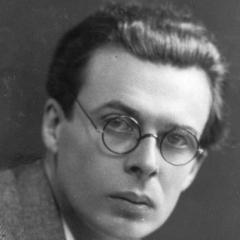
Aldous Huxley
Aldous Huxley

Aldous Huxley was an English writer and philosopher, renowned for his dystopian novel 'Brave New World'. Born on July 26, 1894, in Godalming, Surrey, England, he was the younger brother of the poet and critic Leonard Huxley. Huxley's works frequently delved into the interplay of science, politics, and philosophy, and he was a prominent figure in the literary movement known as the 'Lost Generation'. He passed away on November 22, 1963. more

You May Also Like

“She stared out at the gloaming and didn't care that it might be the last twilight she ever saw. She cared only that she had spent too much of her twenty-six years alone, with no one at her side to share the sunsets, the starry skies, the turbulent beauty of storm clouds. She wished that she had reached out to people more, instead of retreating inward, wished that she had not made her heart into a sheltering closet. Now, when nothing mattered any more, when the insight couldn't do her any damn good at all, she realized that there was less hope of survival alone than with others. She'd been acutely aware that terror, betrayal, and cruelty had a human face, but she had not sufficiently appreciated that courage, kindness, and love had a human face as well. Hope wasn't a cottage industry; it was neither a product that she could manufacture like needlepoint samplers nor a substance that she could secrete, in her cautious solitude, like a maple tree producing the essence of syrup. Hope was to be found in other people, by reaching out, by taking risks, by opening her fortress heart.”

“He wondered what would happen if he abandoned the spinster’s offer of marriage, if he could make the story’s denouement true to the strange, nuanced, open-ended and infinitely interesting life he was sharing now with Constance Fenimore Woolson, if he could make his adventurer begin to need, or half-need, the domestic life of a lodger with an intelligent and reserved woman who was lonely, but not willing to be preyed upon. She would ask him for nothing as obvious as marriage; what she wanted was a close and satisfying and, if necessary, unconventional attachment with loyalty and care and affection as well as solitude and distance.”

“Writing is no more than wending a way in an attempt to restore all of the paths that had been cut-short, headed off at the pass, de-railed, even if worded byways are more dangerous than wooded paths, even if the way of writing is ill-lit, and most of all braced by the uncertainty of solitary passage.”