Quotessence
Home / Quotes / Quote by Louis Althusser

Quote by Louis Althusser

“Those who are in ideology believe themselves by definition outside ideology: one of the effects of ideology is the practical denegation of the ideological character of ideology by ideology: ideology never says, ‘I am ideological’. It is necessary to be outside ideology, i.e. in scientific knowledge, to be able to say: I am in ideology (a quite exceptional case) or (the general case): I was in ideology. As is well known, the accusation of being in ideology only applies to others, never to oneself (unless one is really a Spinozist or a Marxist, which, in this matter, is to be exactly the same thing). Which amounts to saying that ideology has no outside (for itself), but at the same time that it is nothing but outside (for science and reality).”

Quote by Louis Althusser

Work

On Ideology

This book delves into the origins, definitions, and applications of ideology, examining its role in shaping political, social, and cultural movements. It analyzes the historical and contemporary significance of ideology and its influence on human behavior and societal structures. more

Author
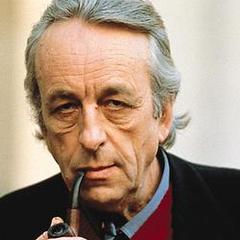
Louis Althusser
Louis Althusser

Louis Althusser was a French philosopher who was active in the 20th century. His thoughts were deeply influenced by Marxism, especially focusing on theories of ideology and structuralism. Althusser's theories had a profound impact on subsequent philosophy, sociology, and political science. more

You May Also Like

“The internet is like everything that came before it, but so much more. More powerful than the greatest words ever written or spoken in any language, more powerful than any image or symbol ever seen, more powerful than hope or fear, more powerful than religion, faith itself, the totality of the human spirit. The invisible infinite that rules over our lives whether we want it to or not. But really, who doesn’t? Everyone wants a master, everyone needs some version of God.”

“The Berlin conference has been subject to a relentless campaign of debunking by modern intellectuals. One claim they make is that the assembled delegates “carved up” Africa like a bunch of gluttons. This is wrong. For one, the carving was already happening when Bismarck acted. The conference was a response to, not a cause of, expanded colonial claims. Critics seem to think that absent the conference Africa would have been left untouched. Quite the opposite. The scramble for Africa created tensions, suspicions, and fears on all sides. Bismarck wanted to set some ground rules.”

“The negationist proposition, in the age in which it is being advanced, cannot therefore be truly denied, since everything, all of us, including those who reject it, have passed over, whether we like it or not, into an age where there is no longer any objective recourse. The proposition, therefore, can be rejected only by a kind of mirror denial. And that is where its victory lies - though in fact it is not its victory, but the victory of real time over the present, over the past, over any form whatsoever of logical articulation of reality.”

“The profoundly negationist character of information, the demand for which has no concern for any historical reality or any moral meaning. Shoah or no Shoah, if Hitler were alive he would be on all the screens. Might Network Man be the model for the disabled person of the future? It is perhaps to him, rather than to the paralytic, that we shall have forcibly to restore the use of his body. An illness that breaks out opportunely just before the departure date and ends exactly on the day the trip was scheduled to end.”

“While God does want us to be open with others, he also encourages us to put boundaries in place as we do. He talks repeatedly about guarding our hearts. So what’s the difference? Hiding is a response out of fear, while guarding is a proactive choice to protect what matters most. In other words, we’re not to deliberately put something of worth where it won’t be valued.”

“For all the differences among the eight hospitals, I was nonetheless surprised by how readily one can feel at home in an operating room, wherever it might be. Once a case was underway, it was still surgery. You still had a human being on the table with his hopes and his fears, and his body opened up to you, trusting you to do right by him. And you still had a group of people striving to work together with enough skill and commitment to warrant that trust.”

“Day by day, month by month, doubt by doubt, law and order became fascism; education, constraint; work, alienation; revolution, mere sport; leisure, a privilege of class; marijuana, a harmless weed; family, a stifling hothouse; affluence, oppression; success, a social disease; sex, an innocent pastime; youth, a permanent tribunal; maturity, the new senility; discipline, an attack on personality; Christianity... and the West... and white skin...”