Quotessence
Home / Quotes / Quote by Judith N. Shklar

Quote by Judith N. Shklar

“It is, however, not only undignified to idealize political victims; it is also very dangerous. One of our political actualities is that the victims of political torture and injustice are often no better than their tormentors. They are only waiting to change places with the latter. Of course, if one puts cruelty first this makes no difference. It does not matter whether the victim of torture is a decent man or a villain. No one deserves to be subjected to the appalling instruments of cruelty.”

Quote by Judith N. Shklar

Work

Ordinary Vices

This book delves into the various vices that humans are prone to, examining how they shape personal lives and societal dynamics. It offers a nuanced look at the darker aspects of human nature. more

Author

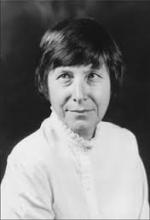
Judith N. Shklar
Judith N. Shklar

Judith N. Shklar was an American political theorist renowned for her exploration of political emotion and the moral aspects of politics. She served as a professor at Harvard University and her writings have had a profound impact on the fields of political theory and ethics. more

You May Also Like

“In the politics of eternity, the seduction by a mythicized past prevents us from thinking about possible futures. The habit of dwelling on victimhood dulls the impulse of self-correction. Since the nation is defined by its inherent virtue rather than by its future potential, politics becomes a discussion of good and evil rather than a discussion of possible solutions to real problems. Since the crisis is permanent, the sense of emergency is always present; planning for the future seems impossible or even disloyal. How can we even think of reform when the enemy is always at the gate?”

“Being a rape victim just sucked, for a while. Sometimes, though, without meaning to be, I was proud: I have suffered, and that entitled me to something, but I didn’t know what. Everyone seemed to be reaching deep into the crevices of their souls to find oozing gobs of pain, and if that pain was parented by some distant generation that spent brutal winters chasing diminishing herds after its own numbers had dwindled from the settler’s diseases and brute force, it seems ever more potent, wrapped around our DNA double-helixes. A pain so old begins to feel like predestination, locking every generation into more, whether that’s the truth or something I tell myself because I like the pain. Even more, I savor the twisted prestige of inheriting old hurts most people only read about in history books.”

“How could you do that to me?" I repeat. I don´t have to itemize. He knows what I speak of. Eventually N produces three answers, in this order: 1. "Because I am a complete rotter." I silently agree, but it´s a cop-out: I have maggots, therefore I am dead. 2. "I was stressed at work and unhappy and we were always fighting...and you know I was just crazy..." I cut him off, saying, "You don´t get to be crazy. You did exactly what you chose to do." Which is true, he did. It is what he has always done. He therefore seems slightly puzzled at the need for further diagnosis, which may explain his third response: 3. "I don´t know." This, I feel instinctively, is the correct answer. How can I stay angry with him for being what he is? I was, after all, his wife, and I chose him. No coincidences, that´s what Freud said. None. Ever. I wipe my eyes on my sleeve and walk toward the truck, saying to his general direction, "Fine. At least now I know: You don´t know." I stop and turn around and fire one more question: a bullet demanding attention in the moment it enters the skin and spreads outward, an important bullet that must be acknowledged. "What did you feel?" After a lengthy pause, he answers. "I felt nothing." And that, I realize too late, was not the whole truth, but was a valid part of the truth. Oh, and welcome to the Serengeti. That too.”

“One tweet includes a photo of her at fourteen, skinny and smiling through braces in her field hockey uniform, the text screaming, THIS IS HOW OLD TAYLOR BIRCH WAS WHEN JACOB STRANE ASSAULTED HER. I try to imagine the same line paired with the Polaroids Strane took of me at fifteen, my heavy-lidded eyes and swollen lips, or with the photos I took of myself at seventeen, standing before a backdrop of birch trees, lifting my skirt as I stared at the camera, looking like a Lolita and knowing exactly what I wanted, what I was. I wonder how much victimhood they’d be willing to grant a girl like me.”

“In academic circles influences by Said, any reference to acts of 'terrorism' was soon regarded as off-limits, a reflection of Zionist efforts to discredit the legitimate aspirations of a subject population by casting aspersions on their so-called freedom fighters. In this way, 'blaming the victim' was deployed as an ideological weapon that might constrain debate.”