Quotessence
Home / Quotes / Quote by Frank Herbert

Quote by Frank Herbert

Work

DUNE

Frank Herbert's 'DUNE' is a seminal work in the science fiction genre, known for its intricate world-building and complex political intrigue. The story follows Paul Atreides, a young nobleman who must navigate a treacherous landscape of political machinations and religious fervor. The novel is set on the desert planet Arrakis, which is rich in a valuable resource known as melange, essential for interstellar travel. 'DUNE' explores themes of religion, politics, ecology, and the human condition, and has been praised for its depth and philosophical musings. more
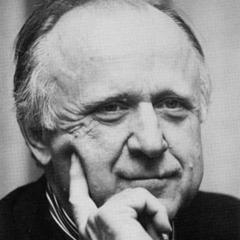
Author

Frank Herbert
Frank Herbert

Frank Herbert, born on October 8, 1920, was an influential science fiction author from the United States. His masterpiece 'Dune' is considered a classic in the science fiction genre and has had a profound impact on literature and society. more

You May Also Like

“How many people today live in a language that is not their own? Or no longer, or not yet, even know their own and know poorly the major language that they are forced to serve? This is the problem of immigrants, and especially of their children, the problem of minorities, the problem of a minor literature but also a problem for all of us: how to tear a minor literature away from its own language, allowing it to challenge the language and making it follow a sober revolutionary path? How to become a nomad and an immigrant and a gypsy in relation to one's own language? Kafka answers: steal the baby from its crib, walk the tight rope.”

“And the conclusion is: Survive to reach it! Survive! At any price! This is simply a turn of phrase, a sort of habit of speech: "at any price." But then the words swell up with their full meaning, and an awesome vow takes shape: to survive at any price. And whoever takes that vow, whoever does not blink before its crimson burst—allows his own misfortune to overshadow both the entire common misfortune and the whole world. This is the great fork of camp life. From this point the roads go to the right and to the left. One of them will rise and the other will descend. If you go to the right—you lose your life, and if you go to the left—you lose your conscience.”

“For centuries it was considered that a criminal was given a sentence for precisely this purpose, to think about his crime for the whole period of his sentence, be conscience-stricken, repent, and gradually reform. But the Gulag Archipelago knows no pangs of conscience! Out of one hundred natives—five are thieves, and their transgressions are no reproach in their own eyes, but a mark of valor. They dream of carrying out such feats in the future even more brazenly and cleverly. They have nothing to repent. Another five… stole on a big scale, but not from people; in our times, the only place where one can steal on a big scale is from the state, which itself squanders the people's money without pity or sense—so what was there for such types to repent of? Maybe that they had not stolen more and divvied up—and thus remained free? And, so far as another 85 percent of the natives were concerned—they had never committed any crimes whatever. What were they supposed to repent of? That they has thought what they thought? (Nonetheless, they managed to pound and muddle some of them to such an extent that they did repent—of being so depraved….) Or that a man had surrendered and become a POW in a hopeless situation? Or that he had taken employment under the Germans instead of dying of starvation? (Nonetheless, the managed so to confuse what was permitted and what was forbidden that there were some such who were tormented greatly: I would have done better to die than to have earned that bread.) Or that while working for nothing in the collective-farm fields, he had taken a mite to feed his children? Or that he had taken something from a factory for the same reason? No, not only do you not repent, but your clean conscience, like a clear mountain lake, shines in your eyes.”