Quotessence
Home / Quotes / Quote by Gelett Burgess

Quote by Gelett Burgess

“Beware of a woman who does not sign her name to her letters. She will bear watching. Aye, she has a past.”

Quote by Gelett Burgess

Author
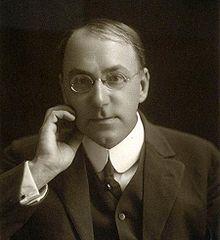
Gelett Burgess
Gelett Burgess

Gelett Burgess was an American poet born on January 30, 1866, and died on September 18, 1951. His poetry is known for its unique style and sense of humor, which had a profound impact on American literature in the early 20th century. more

You May Also Like

“The Dark Cloud Is the decision I could have made to go into a homicidal rage when my bullies laughed at my father’s leg because he was shot in his ankle during the Bosnian War Is the rage I felt when 4 of my friends were raped in college because rapists like to roar Is the fierce determination I have to make sure that no woman ever gets raped Is the tragic end of girls and babies who were slaughtered while their rapists escaped”

“Women are more likely than men to have higher disgust sensitivities, which fits with their greater sensitivity to smells generally, though this does not result un differences in perception or consumption. Other individual differences include proneness to mood dysregulation, like bipolar disorder and major depression, such that more intense and prolonged periods of negative affect -sadness and fear- are experienced.”

“Oh, what strange wonderful clocks women are. They nest in Time. They make the flesh that holds fast and binds eternity. They live inside the gift, know power, accept, and need not mention it. Why speak of Time when you are Time, and shape the universal moments, as they pass, into warmth and action? How men envy and often hate these warm clocks, these wives, who know they will live forever. So what do we do? We men turn terribly mean, because we can’t hold to the world or ourselves or anything. We are blind to continuity, all breaks down, falls, melts, stops, rots, or runs away. So, since we cannot shape Time, where does that leave men? Sleepless. Staring.”

“the more I impersonated Cristóbal, the more it affected my psyche. I almost took offense at Angélica’s comment; the way she trivialized men and bundled them all together as if they were one entity. Living as a man was having strange effects on me. For one, it was forcing me to see them as individuals. Cristóbal and Martin, for example, were different in so many ways I could no longer subscribe to the “all men are the same” mentality.”