Quotessence
Home / Quotes / Quote by Daphne du Maurier

Quote by Daphne du Maurier

“She thought of the laughing, carefree Jem who had driven her to Launceston, who had swung hands with her in the market square, who had kissed her and held her. Now he was grave and silent, his face in shadow. The idea of a dual personality troubled her, and frightened her as well. He was like a stranger to her tonight, obsessed by some grim purpose she could not understand.”

Quote by Daphne du Maurier

Work

JAMAICA INN

Daphne Du Maurier's classic novel weaves a tale of intrigue and romance amidst the haunting ruins of Jamaica Inn. The story unfolds in the shadow of the Napoleonic Wars, where the inn serves as a cover for a band of smugglers. The protagonist, Mary Yellan, finds herself entangled in the dangerous world of her distant cousin, who is entangled in a web of deceit and betrayal. more

Author

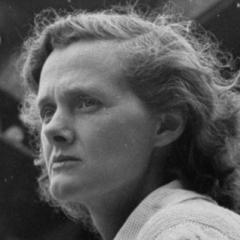
Daphne du Maurier
Daphne du Maurier

British author known for her suspense novels and romantic stories. Daphne du Maurier's works are characterized by their mysterious and supernatural elements, with her most famous novels being 'Rebecca' and 'The Turn of the Screw'. Her writing style has had a profound impact on literature. more

You May Also Like

“Some people, who never engaged in any research about DID, claim that there is no connection between child abuse and DID. Then they unwittingly contradict themselves by stating DID doesn’t even exist. DSM-5 concluded from the rigorous research into DID: “Interpersonal physical and sexual abuse is associated with an increased risk of dissociative identify disorder. Prevalence of childhood abuse and neglect in the United States, Canada and Europe among those with the disorder is close to 90%.”

“Perhaps DID raises problematic philosophical and psychological concerns about the nature of the mind itself... Ideas of a unitary ego would incline professionals to see multiplicity as a behavioural disturbance. However, if the mind is seen as a seamless collaboration between multiple selves - a kind of trade union agreement for co-existence - it is less threatening to face this subject.”

“really they can do whatever they want. I can’t fight back, I can’t run away, and if they decide they don’t feel like letting me use the phone, what am I going to do? I’m at their mercy. I have never thought of this before, but I have never been at anyone’s mercy in my entire life. For all my complaints about my life, I am completely free.”

“Finding yourself" is not really how it works. You aren't a ten-dollar bill in last winter's coat pocket. You are also not lost. Your true self is right there, buried under cultural conditioning, other people's opinions, and inaccurate conclusions you drew as a kid that became your beliefs about who you are. "Finding yourself" is actually returning to yourself. An unlearning, an excavation, a remembering who you were before the world got its hands on you.”

“Once established, the young girl's dependency is systematically supported as she proceeds through childhood. For being "nice" - nonchallenging, nonconfronting, noncomplaining - she's rewarded with good grades, the approval of her parents and teachers, and the affection of her peers. What reason is there for her to turn deviant or nonconformist? The going is good, so she conforms. Increasingly, she patterns herself after what's expected of her.”

“We have only one real shot at "liberation", and that is to emancipate ourselves from within. It is the thesis of this book that personal, psychological dependency - the deep wish to be taken care of by others - is the chief force holding women down today. I call this "The Cinderella Complex" - a network of largely repressed attitudes and fears that keeps women in a kind of half-light, retreating from the full use of their minds and creativity. Like Cinderella, women today are still waiting for something external to transform their lives.”