Quotessence
Home / Quotes / Quote by Audrey Niffenegger

Quote by Audrey Niffenegger

“When I began writing The Night Bookmobile, it was a story about a woman's secret life as a reader. As I worked it also became a story about the claims that books place on their readers, the imbalance between our inner and outer lives, a cautionary tale of the seductions of the written word. It became a vision of the afterlife as a library, of heaven as a funky old camper filled with everything you've ever read. What is this heaven? What is it we desire from the hours, weeks, lifetimes we devote to books? What would you sacrifice to sit in that comfy chair with perfect light for an afternoon in eternity, reading the perfect book, forever?”

Quote by Audrey Niffenegger

Work

The Night Bookmobile

Browse quotes and source details for this work. more

Author

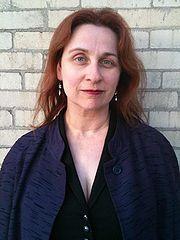
Audrey Niffenegger
Audrey Niffenegger

Audrey Niffenegger is an American writer known for her unique literary style and profound emotional descriptions. Her works often explore complex interpersonal relationships and philosophical issues, with her most famous novel being 'The Time Traveler's Wife'. more

You May Also Like

“A good book is never exhausted. It goes on whispering to you from the wall. Books perfume and give weight to a room. A bookcase is as good as a view, as the sight of a city or a river. There are dawns and sunsets in books - storms, fogs, zephyrs. I read about a family whose apartment consists of a series of spaces so strictly planned that they are obliged to give away their books as soon as they've read them. I think they have misunderstood the way books work. Reading a book is only the first step in the relationship. After you've finished it, the book enters on its real career. It stand there as a badge, a blackmailer, a monument, a scar. It's both a flaw in the room, like a crack in the plaster, and a decoration. The contents of someone's bookcase are part of his history, like an ancestral portrait. - in "About books; recoiling, rereading, retelling", The New York Times, February 22, 1987”

“Some years ago I had a conversation with a man who thought that writing and editing fantasy books was a rather frivolous job for a grown woman like me. He wasn’t trying to be contentious, but he himself was a probation officer, working with troubled kids from the Indian reservation where he’d been raised. Day in, day out, he dealt in a concrete way with very concrete problems, well aware that his words and deeds could change young lives for good or ill. I argued that certain stories are also capable of changing lives, addressing some of the same problems and issues he confronted in his daily work: problems of poverty, violence, and alienation, issues of culture, race, gender, and class... “Stories aren’t real,” he told me shortly. “They don’t feed a kid left home in an empty house. Or keep an abusive relative at bay. Or prevent an unloved child from finding ‘family’ in the nearest gang.” Sometimes they do, I tried to argue. The right stories, read at the right time, can be as important as shelter or food. They can help us to escape calamity, and heal us in its aftermath. He frowned, dismissing this foolishness, but his wife was more conciliatory. “Write down the names of some books,” she said. “Maybe we’ll read them.” I wrote some titles on a scrap of paper, and the top three were by Charles de lint – for these are precisely the kind of tales that Charles tells better than anyone. The vital, necessary stories. The ones that can change and heal young lives. Stories that use the power of myth to speak truth to the human heart. Charles de Lint creates a magical world that’s not off in a distant Neverland but here and now and accessible, formed by the “magic” of friendship, art, community, and social activism. Although most of his books have not been published specifically for adolescents and young adults, nonetheless young readers find them and embrace them with particular passion. I’ve long lost count of the number of times I’ve heard people from troubled backgrounds say that books by Charles saved them in their youth, and kept them going. Recently I saw that parole officer again, and I asked after his work. “Gets harder every year,” he said. “Or maybe I’m just getting old.” He stopped me as I turned to go. “That writer? That Charles de Lint? My wife got me to read them books…. Sometimes I pass them to the kids.” “Do they like them?” I asked him curiously. “If I can get them to read, they do. I tell them: Stories are important.” And then he looked at me and smiled.”

“Cosa farei senza libri? Ne ho la casa piena, eppure non mi bastano mai. Vorrei avere una giornata di trentasei ore per poter leggere a mio piacere. Tengo libri di tutte le dimensioni: da tasca, da borsa, da valigia, da taschino, da scaffale, da tavolo. E ne porto sempre uno con me. Non si sa mai: se trovo un momento di tempo, se mi fanno aspettare in un ufficio, che sia alla posta o dal medico, tiro fuori il mio libro e leggo. Quando ho il naso su una pagina non sento la fatica dell'attesa. E, come dice Ortega y Gasset, in un libro mi "impaeso", a tal punto che mi è difficile spaesarmi. Esco dai libri con le pupille dilatate. Lo considero il piacere più grande, più sicuro, più profondo della mia vita.”