Quotessence
Home / Quotes / Quote by Elizabeth Marie Pope

Quote by Elizabeth Marie Pope

Work

The Perilous Gard

This book is a historical fantasy set in the 14th century, featuring a young woman's journey into a mysterious and enchanted garden. The narrative delves into the complexities of magic, love, and the struggle between good and evil. more
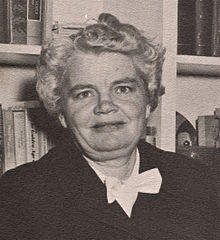
Author

Elizabeth Marie Pope

Elizabeth Marie Pope was a renowned American science fiction author, born on May 1, 1917, and passed away on August 4, 1992. Her works are known for their profound scientific philosophy and rich imagination, having a significant impact on the science fiction genre. more

You May Also Like

“Because the aviator-organisms are flexible with the atmospheric attributes of the area they’re flying in, the other three races theorized and overall concluded that all aviator-organisms were unable to incisively analyze their surroundings and formulate an opinion, and, with their putative lack of incisiveness, the other races concluded that they’ll be unable to find a permanent, suitable abode for themselves, as they thought that they’ll be constantly flying in search for one, and, therefore, become so tired that the aviator-organisms would be unable to provide for themselves. Because they would be unable to provide for themselves, they would become extinct. The other three races did not compile a sufficient amount of evidentiary support to prove that it is possible for the entire concatenation of events to actually occur. They used the slippery slope fallacy, which would make them slip and suffer a downfall.”

“She could gather information that may refute the claims that were structured by logical fallacies and replace them with sufficient empirical evidence! After weeks of persisting in accumulating more data points, and weeks more in reading each response, Sapienas found a consensus within all the responses for each race, discovering that these responses contradicted all the logical fallacy-based claims about every race.”

“When we say of things that they are finite, we understand thereby that they not only have a determinateness, that their quality is not only a reality and an intrinsic determination, that finite things are not merely limited . . . but that on the contrary, non-being constitutes their nature and being. Finite things are, but their relation to themselves is that they are negatively self-related and this very relation drives them beyond their being. They are, but the truth of this being is their destruction. The finite not only alters, as anything does, but it ceases to be, and it is not merely a possibility that it ceases to be, as though it could be that it might not cease. No, the nature of the being of finite things is that they have within them the seeds of their own destruction; the hour of their birth is the hour of their death.”