“In his whole presentation, it never emerges that women are different beings – we will not say lesser, rather the opposite from men. He finds the suppression of women an analogy to that of Negroes. Any girl, even without a suffrage or legal competence, whose hand a man kisses and for whose love he is prepared to dare all, could have set him right. It is really a stillborn thought to send women into the struggle for existence exactly as man. If, for instance, I imagined my gentle sweet girl as a competitor, it would only end in my telling her, as I did seventeen months ago, that I am fond of her and that I implore her to withdraw from the strife into the calm, uncompetitive activity of my home. It is possible that changes in upbringing may suppress all a woman’s tender attributes, needful of protection and yet so victorious, and that she can then earn a livelihood like men. It is also possible that in such an event one would not be justified in mourning the passing away of the most delightful thing the world can offer us – our ideal of womanhood. I believe that all reforming action in law and education would break down in front of the fact that, long before the age at which a man can earn a position in society, Nature has determined woman’s destiny through beauty, charm, and sweetness. Law and custom have much to give women that has been withheld from them, but the position of women will surely be what it is: in youth an adored darling and in mature years a loved wife.”
Quote by Sigmund Freud
Work
The Complete Letters of Sigmund Freud to Wilhelm Fliess 1887-04
Browse quotes and source details for this work. more
Author
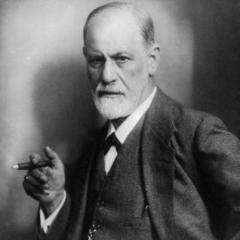
Sigmund Freud
Sigmund Freud, born on May 6, 1856, in Moravia, and died on September 23, 1939, in London, was an Austrian neurologist and the founder of psychoanalysis. Known as the father of modern psychology, Freud made significant contributions to the understanding of human psychology, introducing concepts such as the unconscious mind, dream analysis, and sexual theory. more
You May Also Like
Source: Know My Name
Source: Liars
Source: The Master and Margarita / A Young Doctor's Notebook / The White Guard / A Dog's Heart
Source: The Love Elixir of Augusta Stern
Source: Enough Rope
“What would my voice sound like if I dare to let it exist undisrupted?”
Source: This Thread of Gold: A Celebration of Black Womanhood
Source: Lacan on Love: An Exploration of Lacan's Seminar VIII, Transference
Source: Hags: The Demonisation of Middle-Aged Women