Quotessence
Home / Quotes / Quote by Howard Zinn

Quote by Howard Zinn

“Civil disobedience, as I put it to the audience, was not the problem, despite the warnings of some that it threatened social stability, that it led to anarchy. The greatest danger, I argued, was civil obedience, the submission of individual conscience to governmental authority. Such obedience led to the horrors we saw in totalitarian states, and in liberal states it led to the public's acceptance of war whenever the so-called democratic government decided on it... In such a world, the rule of law maintains things as they are. Therefore, to begin the process of change, to stop a war, to establish justice, it may be necessary to break the law, to commit acts of civil disobedience, as Southern black did, as antiwar protesters did.”

Quote by Howard Zinn

Work

You Can't Be Neutral on a Moving Train: A Personal History of Our Times

Written by Howard Zinn, this work is a blend of personal anecdotes and critical analysis, examining the impact of historical events on the author's life and the broader society. The book delves into the author's involvement in various social movements and his reflections on the role of activism in shaping the modern world. more

Author
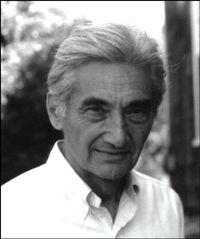
Howard Zinn
Howard Zinn

American historian known for his critical analysis of historical events and advocacy for social justice. His work emphasizes the connection between history and contemporary social issues, particularly focusing on the role of ordinary people in the historical process. more

You May Also Like

“The courage to begin again comes from recognising that our worth is not measured by uninterrupted success. It lies in our willingness to rise after falling, to try again with new understanding. ... Failure can be a teacher, illuminating what needs adjusting. ... Beginning again does not mean repeating the same steps; it means moving forward with greater wisdom”

“Most of you,' he went on, 'already know how I have been able to limit the area of investigation in a first approximation. But one or two of you are not yet in formed. For you, and to refresh everyone's memory, I'll go over my calculations again.' At that point he gave me a roguish and forceful look demanding my complicity in this adroit falsehood. For naturally everyone was still in the dark. But by this simple ruse, each person had the impression of belonging to a minority, of being among 'one or two not yet in formed', felt himself surrounded by a convinced majority, and was eager to be quickly convinced himself.”

“Our house was outside the city, off one of the blacktop roads. We had us a big dog that my daddy would keep on a chain in the front yard. A big part German shepherd. I hated that chain but we didn’t have a fence, we were right off the road there. That dog hated that chain. But he had dignity. What he’d do, he’d never go out to the length of that chain. He’d never even go out to where that chain got tight. Even if a mailman pulled up, or a salesman. Out of dignity, this dog pretended like he chose this one area to stay in that just happened to be inside the length of the chain. He just up and made it not relevant. Maybe he wasn’t pretending—maybe he really up and chose that little circle for his own world. He had a power to him. All his life on that chain. I loved that damned dog.”

“Fear is not something easily shrugged off; it hangs on its prey like a heavy cloak threatening to choke and weigh down the wearer. Despite fear’s awful hindering effects, we must dare to behave boldly in its presence. For boldness is one of the few weapons that can convince fear to loosen its grip.”