Quotessence
Home / Quotes / Quote by Jared Taylor

Quote by Jared Taylor

“Science writers Po Bronson and Ashley Merryman have found that ethnic pride is an important element of self-esteem for other races but they draw the line at whites: “It’s horrifying to imagine kids being ‘proud to be white’. ” Many intellectuals believe whites are collectively guilty. As James Traub of The New Yorker wrote, when it comes to any discussion about race, whites must acknowledge that they are the offending party: “One’s hand is stayed by the knowledge of innumerable past hurts and misdeeds. The recognition of those wrongs, along with the acceptance of the sense of collective responsibility—guilt—that comes with recognition is a precondition to entering the discussion [about race].” Joe Klein, in New York Magazine, wrote that any conversation about race must begin with a confession: “It’s our fault; we’re racists.” “Black anger and white surrender have become a staple of contemporary racial discourse,” writes another commentator. Most blacks endorse this view. James Baldwin wrote that any real dialogue between the races requires a confession from whites that is nothing less than “a cry for help and healing.” Popular culture casually denigrates whites. Jay Blumenfield, an executive producer for the Showtime cable network, was working in 2004 on a reality program tentatively titled “Make Me Cool,” in which a group of blacks were to give “hipness makeovers” to a series of “desperately dweebie” whites. Why whites? Mr. Blumenfield explained that the purpose of the program was to correct “uncoolness,” and that “the easiest way to express that is they’ll be white.” Gary Bassell, head of an advertising agency that specializes in reaching Hispanics explained that “we’ve been shaped by an American pop culture today that increasingly proves that color is cool and white is washed out.” Miss Gallagher noted above that there are “few things more degrading than being proud to be white.” The United States Patent and Trademark Office (USPTO) agrees. In 2005, it refused to grant a trademark on the phrase “White Pride Country Wide.” It explained that “the ‘white pride’ element of the proposed mark is considered offensive and therefore scandalous.” The USPTO has nevertheless trademarked “Black Power” and “Black Supremacy,” and apparently finds nothing scandalous in “African Pride,” “Native Pride!” “Asian Pride,” “Black Pride,” “Orgullo Hispano” (Hispanic Pride), “Mexican Pride,” and “African Man Pride,” all of which have been trademarked.”

Quote by Jared Taylor

Work

White Identity: Racial Consciousness in the 21st Century

Browse quotes and source details for this work. more

Author
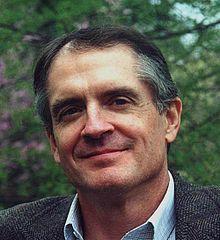
Jared Taylor
Jared Taylor

Jared Taylor, born on September 15, 1951, is an American journalist known for his views on racism and immigration issues. He was the editor of 'American Renaissance' magazine and has contributed articles to various publications, including 'The American Conservative' and 'The New American'. more

You May Also Like

“It would be logical for any group whose only sense of identity is the negative one of wickedness and oppression to dilute its wickedness by mixing with more virtuous groups. This is, upon reflection, exactly what celebrating diversity implies. James Carignan, a city councilor in Lewiston, Maine, encouraged the city to welcome refugees from the West African country of Togo, writing, “We are too homogeneous at present. We desperately need diversity.” He said the Togolese—of whom it was not known whether they were literate, spoke English, or were employable—“will bring us the diversity that is essential to our quest for excellence.” Likewise in Maine, long-serving state’s attorney James Tierney wrote of racial diversity in the state: “This is not a burden. This is essential.” An overly white population is a handicap. Gwynne Dyer, a London-based Canadian journalist, also believes whites must be leavened with non-whites in a process he calls “ethnic diversification.” He noted, however, that when Canada and Australia opened their borders to non-white immigration, they had to “do good by stealth” and not explain openly that the process would reduce whites to a minority: “Let the magic do its work, but don’t talk about it in front of the children. They’ll just get cross and spoil it all.” Mr. Dyer looked forward to the day when politicians could be more open about their intentions of thinning out whites. President Bill Clinton was open about it. In his 2000 State of the Union speech, he welcomed predictions that whites would become a minority by mid-century, saying, “this diversity can be our greatest strength.” In 2009, before a gathering of the American-Arab Anti-Discrimination Committee, he again brought up forecasts that whites will become a minority, adding that “this is a very positive thing.” [...] Harvard University professor Robert Putnam says immigrants should not assimilate. “What we shouldn’t do is to say that they should be more like us,” he says. “We should construct a new us.” When Marty Markowitz became the new Brooklyn borough president in 2002, he took down the portrait of George Washington that had hung in the president’s office for many years. He said he would hang a picture of a black or a woman because Washington was an “old white man.” [...] In 2000, John Sharp, a former Texas comptroller and senator told the state Democratic Hispanic Caucus that whites must step aside and let Hispanics govern, “and if that means that some of us gringos are going to have to give up some life-long dreams, then we’ve got to do that.” When Robert Dornan of California was still in Congress, he welcomed the changing demographics of his Orange County district. “I want to see America stay a nation of immigrants,” he said. “And if we lose our Northern European stock—your coloring and mine, blue eyes and fair hair—tough!” Frank Rich, columnist for the New York Times, appears happy to become a minority. He wrote this about Sonya Sotomayor’s Senate confirmation hearings: “[T]his particular wise Latina, with the richness of her experiences, would far more often than not reach a better [judicial] conclusion than the individual white males she faced in that Senate hearing room. Even those viewers who watched the Sotomayor show for only a few minutes could see that her America is our future and theirs is the rapidly receding past.” It is impossible to imagine people of any other race speaking of themselves this way.”

“In 2000, interior minister [of France] Jean-Pierre Chevenement said Europe should become a place of race-mixing (métissage) and that governments should make efforts to persuade Europeans to accept this. In 2007, both candidates in the French presidential election took the same view. Socialist Ségolène Royale, said that “miscegenation is an opportunity for France,” adding that she would encourage immigration and would be “president of a France that is mixed-race and proud of it.” Nicolas Sarkozy, the conservative candidate who won the election, said he was proud of “a France that understands that creation comes from mixing, from openness, and from coming together—I’m not afraid of the word—from miscegenation.” It is common to project contemporary views upon the past. George Washington University professor Amitai Etzioni has written that people who marry across racial lines are “accepting the core American value of openness and living up to its tenets.” Andrew Sullivan, former editor of The New Republic has written that “miscegenation has always been the ultimate solution to America’s racial divisions.” These two got it wrong. For most of American history, miscegenation was the ultimate nightmare for whites. That whites should now see it as the ultimate solution to racial conflict is a sign not only of how radically our thinking has changed but also of how stubborn racial conflict turned out to be. Civil rights laws were supposed to usher in a new era of racial harmony. To propose now that the only solution to racial enmity is to eliminate race itself through intermarriage is to admit that different races cannot live together in peace. Of course, widespread miscegenation would not eliminate race; it would eliminate whites. Whites are no more than 17 percent of the world’s population and are having perhaps seven percent of the world’s children. No one is proposing large-scale intermarriage for Africa or Asia. Nor would mixing eliminate discrimination. Blacks, South Americans, and Asians discriminate among themselves on the basis of skin tone even when they are the same race. Thomas Jefferson looked forward to the day when whites would people the Americas from north to south. Today such a view would be universally scorned because it would mean the displacement of other populations, but the revolution in thinking among today’s whites leaves no grounds to argue against their own displacement through immigration or disappearance through intermarriage. Whites may have a sentimental attachment to the notion of a white America, but if races are interchangeable that attachment is irrational. If the only legitimate group sentiment for whites is guilt, perhaps it is only right that they should retreat gracefully before the advances of peoples they have wronged. There could hardly be more striking proof not only of how the thinking of whites has changed but how different it is from that of every other racial group. All non-whites celebrate their growing numbers and influence—just as whites once did. Whites—not only in America but around the world—cheerfully contemplate their disappearance as a distinct people.”

“I abhor the human stupidity and vanity that takes pride in forcing tigers, lions, and leopards to sit nicely side by side. It reminds me of the government choreography that displays brightly garbed minorities in a parade, minorities granted a crumb of political autonomy in exchange for providing an optical simulation of cultural diversity in their country of residence. But wild animals (as opposed to humans) form groups according to species to enjoy specific benefits.”

“[L]et us imagine a mirror image of what is happening today. What if millions of white Americans were pouring across the border into Mexico, taking over parts of cities, speaking English rather than Spanish, celebrating the Fourth of July rather than Cinco de Mayo, sleeping 20 to a house, demanding bilingual instruction and welfare for immigrants, opposing border control, and demanding ballots in English? What if, besides this, they had high rates of crime, poverty, and illegitimacy? Can we imagine the Mexicans rejoicing in their newfound diversity? And yet, that is what Americans are asked to do. For whites to celebrate diversity is to celebrate their own declining numbers and influence, and the transformation of their society. For every other group, to celebrate diversity is to celebrate increasing numbers and influence. Which is a real celebration and which is self-deception? Whites—but only whites—must never take pride in their own people. Only whites must pretend they do not prefer to associate with people like themselves. Only whites must pretend to be happy to give up their neighborhoods, their institutions, and their country to people unlike themselves. Only whites must always act as individuals and never as members of a group that promotes shared interests. Racial identity comes naturally to all non-white groups. It comes naturally because it is good, normal, and healthy to feel kinship for people like oneself. Despite the fashionable view that race is a socially created illusion, race is a biological reality. All people of the same race are more closely related genetically than they are to anyone of a different race, and this helps explain racial solidarity. Families are close for the same reason. Parents love their children, not because they are the smartest, best-looking, most talented children on earth. They love them because they are genetically close to them. They love them because they are a family. Most people have similar feelings about race. Their race is the largest extended family to which they feel an instinctive kinship. Like members of a family, members of a race do not need objective reasons to prefer their own group; they prefer it because it is theirs (though they may well imagine themselves as having many fine, partly imaginary qualities). These mystic preferences need not imply hostility towards others. Parents may have great affection for the children of others, but their own children come first. Likewise, affection often crosses racial lines, but the deeper loyalties of most people are to their own group—their extended family.”

“People of all races generally prefer the company of people like themselves. Racial diversity is a source of conflict, not strength. Non-whites, especially blacks and Hispanics, nurture a strong sense of racial pride and solidarity. Whites have little sense of racial solidarity, and most whites strongly condemn any signs of it. Immigration from non-European countries is changing the United States in profound ways, many of which whites find disagreeable. To the extent that these statements are true, they have serious implications both for the country as a whole and for whites as a group.”

“Many laws passed by Congress have grandiose names and are hailed by their sponsors as far more important than they really are. In one case, however, legislators promised little of consequence for a law that reshaped the country. The Hart-Celler Act of 1965, also known as the Immigration and Nationality Act, abolished the national-origins immigration quotas set up in 1924 to preserve the European character of the American population. As we saw in the previous chapter, the promoters of the act insisted it would have little effect on the ethnic mix of the country, which was then nearly 90 percent white. By 2008, however, whites had already fallen to 65 percent of the population, and the Census Bureau was predicting they would become a minority in 2042—just 77 years after enactment. This would be a more dramatic long-term effect than perhaps that of any other legislation passed in the 20th century. Post-Hart-Celler immigration has also enormously increased the population of the United States, which is the only industrial nation that is growing like a developing country. In 2010, the population was expanding by about 7,500 people every day—nearly three million a year—and immigrants and their children accounted for 75 percent of the 27.3 million increase from 2000 to 2010. Growth at this rate requires enormous amounts of new infrastructure, including about 8,000 new schools every ten years. In 2008, the Census Bureau projected that the population would expand from 302 million to 439 million by 2050, assuming immigration continues at current rates. If immigration stopped after 2009, there would be much more moderate growth, with the population reaching 345 million rather than 439 million.”

“Many theories have been advanced to explain racial gaps in performance, of which these are the most common: black and Hispanic schools do not get enough money, their classes are too big, students are segregated from whites, minorities do not have enough teachers of their own race. Each of these explanations has been thoroughly investigated. Urban schools, where non-whites are concentrated, often get more money than suburban white schools, so blacks and Hispanics are not short-changed in budget or class size. Teacher race has no detectable effect on learning (Asians, for example, outperform whites regardless of who teaches them), nor do whites in the classroom raise or lower the scores of students of other races. Money is not the problem. From the early 1970s to the 2006-2007 school year per-pupil spending more than doubled in real terms. The Cato Institute calculates that when capital costs are included, the Los Angeles School District spends more than $25,000 per student per year, and the District of Columbia spends more than $28,000. Neither district gets good results. Demographic change can become a vicious cycle: As more minorities and immigrants enter a school system average achievement falls. More money and effort is devoted to these groups, squeezing gifted programs, music and art, and advanced placement courses. The better-performing students leave, and standards fall further.”

“As whites cease to be the mainstream, their interests become less important. In 2008, the College Board, the New York-based non profit that administers Advanced Placement (AP) tests, announced it was dropping AP courses and exams in Italian, Latin literature, and French literature. Blacks and Hispanics are not interested in those subjects, and they were the groups the College Board wanted to reach. In Berkeley, California, the governance council for the school district came up with a novel plan for bridging the racial achievement gap: eliminate all science labs, fire the five teachers who run them, and spend the money on “underperforming” students. The council explained that science labs were used mainly by white students, so they were a natural target for cuts. Many schools have slashed enriched programs for gifted students because so few blacks and Hispanics qualify for them. Evanston Township High School in Illinois prides itself on diversity and academic excellence but, like so many others, is dismayed that the two do not always go together. In 2010 it eliminated its elite freshman honors courses in English because hardly any blacks or Hispanics met the admission criteria. The honors biology course was scheduled for elimination the next year.”

“[M]any whites flee from diversity, but a few welcome it. Joe and Jessica Sweeney of Peoria, Illinois, had been sending their children to private school but decided the multi-racial experience of public school would be valuable. After the switch, their eight-year-old son and nine-year-old daughter were taunted with racial slurs, and became withdrawn. One day, a black student threatened to kill the girl with a box cutter. The same day, the boy showed his parents a large bruise he got when he was knocked down and called “stupid white boy.” The school reacted with indifference. The Sweeneys sent their children back to private school.” Fourteen-year-old James Tokarski was one of a handful of whites attending Bailly Middle School in Gary, Indiana, in 2006. Black students called him “whitey” and “white trash” and repeatedly beat him up. They knocked him unconscious twice. The school offered James a “lunch buddy,” to be with him whenever he was not in class, but his parents took him out of Bailly. The mother of another white student said it was typical for whites to be called “whitey” or “white boy,” and to get passes to eat lunch in the library rather than face hostile blacks in the lunch room. On Cleveland’s West Side, ever since court-ordered busing began in the 1970s, blacks and Hispanics have celebrated May Day by attacking whites. In 2003, Elsie Morales, a Puerto Rican mother of two, told reporters that when she took part in May Day violence as a student in the 1970s she justified it as payback for white oppression. Her daughter Jasmine said it was still common to attack whites: “It’s like if you don’t jump this person with us, you’re a wimp and we’ll get you next.” In the late 1990s, whites were 41 percent of students in Seattle public schools, blacks were 23, and the rest were Hispanic and Asian. In 1995 and 1999, schools conducted confidential surveys about racial harassment. In both years, a considerably larger percentage of white than black students complained of racial taunts or violence. Only an “alternative” newspaper reported the findings, and school representatives refused to discuss them.”