Quotessence
Home / Quotes / Quote by Neil Gaiman

Quote by Neil Gaiman

“It's like the people who believe they'll be happier if they go and live somewhere else, but who learn it doesn't really work that way. Wherever you go, you take yourself with you.”

Quote by Neil Gaiman

Work

The Graveyard Book

This novel is a fantasy tale that explores themes of identity, loss, and the supernatural. The protagonist, a young boy, is orphaned at birth and raised in a graveyard by the spirits who inhabit it. The story delves into the boy's journey as he grows up, learning about his past and the world beyond the graveyard. more
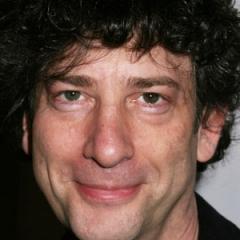
Author

Neil Gaiman
Neil Gaiman

Neil Gaiman, born on November 10, 1960, is a renowned British author. His works span across various genres including fantasy, horror, and science fiction, with notable titles such as 'American Gods' and 'Good Omens'. Gaiman's writing style is distinctive and has won him a dedicated fan base. more

You May Also Like

“The aims of these three groups are entirely irreconcilable. The aim of the High is to remain where they are. The aim of the Middle is to change places with the High. The aim of the Low, when they have an aim – for it is an abiding characteristic of the Low that they are too much crushed by drudgery to be more than intermittently conscious of anything outside their daily lives – is to abolish all distinctions and create a society in which all men shall be equal. Thus throughout history a struggle which is the same in its main outlines recurs over and over again. For long periods the High seem to be securely in power, but sooner or later there always comes a moment when they lose either their belief in themselves or their capacity to govern efficiently, or both. They are then overthrown by the Middle, who enlist the Low on their side by pretending to them that they are fighting for liberty and justice. As soon as they have reached their objective, the Middle thrust the Low back into their old position of servitude, and themselves become the High. Presently a new Middle group splits off from one of the other groups, or from both of them, and the struggle begins over again. Of the three groups, only the Low are never even temporarily successful in achieving their aims. It would be an exaggeration to say that throughout history there has been no progress of a material kind. Even today, in a period of decline, the average human being is physically better off than he was a few centuries ago. But no advance in wealth, no softening of manners, no reform or revolution has ever brought human equality a millimetre nearer. From the point of view of the Low, no historic change has ever meant much more than a change in the name of their masters.”

“Why is the dance beautiful? Answer: because it is an unfree movement. Because the deep meaning of the dance is contained in its absolute, ecstatic submission, in the ideal non-freedom. If it is true that our ancestors would abandon themselves in dancing at the most inspired moments of their lives (religious mysteries, military parades), then it means only one thing: the instinct of non-freedom has been characteristic of human nature from ancient times, and we in our life of today, we are only consciously—”

“Qui dit quoi ? Que dans un monde où tout le monde croit devoir s'exprimer, il n'y a plus d'illumination possible. Rien ne peut être éclairé dans la luminance totale. Il faut beaucoup de silence pour entendre une note. Il faut beaucoup de nuit pour qu'un éclair puisse jaillir, pour qu'une couleur neuve soit perçue, soit reçue.”

“He accumulates wealth in solitude, thinking: how strong, how secure I am now; and does not see, madman as he is, that the more he accumulates, the more he sinks into suicidal impotence. For he is accustomed to relying only on himself, he has separated his unit from the whole, he has accustomed his soul to not believing in people's help, in people or in mankind, and now only trembles lest his money and his acquired privileges perish. Everywhere now the human mind has begun laughably not to understand that a man's true security lies not in his own solitary effort, but in the general wholeness of humanity. But there must needs come a term to this horrible isolation, and everyone will all at once realize how unnaturally they have separated themselves from one another.”