Quotessence
Home / Quotes / Quote by Marcel Pagnol

Quote by Marcel Pagnol

Work

Jean de Florette & Manon of the Springs

Browse quotes and source details for this work. more

Author
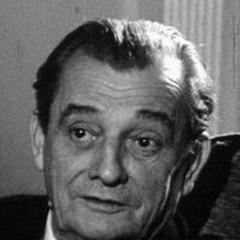
Marcel Pagnol
Marcel Pagnol

Marcel Pagnol was a French playwright, screenwriter, and novelist, renowned for his works that celebrate the Provençal region of France. He is best known for his 'Mistral' cycle, a series of novels and plays that depict the life and culture of the Provençal people. more

You May Also Like

“Up the coast of the New World, the ship bearing ten million bananas ground out its course, every minute the waste heaving brokenly around it more brilliant as the moon rose off the starboard bow and moved into the sky with effortless guile , unashamed of the stigmata blemishing the face she showed from the frozen fogs of the Grand Banks to the jungles of Brazil where along the Rio Branco they knew her for a girl who loved her brother the sun; and the sun, suspicious, trapped her in her evil passion by drawing a blackened hand across her face, leaving the marks which betrayed her and betray her still.”

“The country remained the same, and was extremely uninteresting. The complete similarity of the productions throughout Patagonia is one of its most striking characters. The level plains of arid shingle support the same stunted and dwarf plants; and in the valleys the same thorn-bearing bushes grow. Everywhere we see the same birds and insects. Even the very banks of the river and of the clear streamlets which entered it, were scarcely enlivened by a brighter tint of green. The curse of sterility is on the land, and the water flowing over a bed of pebbles partakes of the same curse. Hence the number of waterfowl is very scanty; for there is nothing to support life in the stream of this barren river. (In regards to the steppes of Patagonia)”

“Rice paddies climb the hillsides in wet, verdant staircases, dense woodlands trade space with geometric farmscapes, tiny Shinto shrines sprout like mushrooms in Noto forests. Villages seem to materialize from nowhere- wedged into valleys, perched atop hills, finessed into coastal corners. Pull over, climb out of your car, breathe deep for a taste of the finest air that will ever enter your lungs: green as a high mountain, salty and sweet, with just a whisper of decay in the finish. Noto gained its reputation as the Kingdom of Fermentation because of this air. For most of its history, Noto was cut off from the rest of Japan, forced into a subsistence model that in many ways endures today. That was possible not only because of the bounty of Noto's fertile environment of trees, grasslands, fresh water, and sea, but because the air is rich with humidity that encourages the growth of healthy bacteria, the building blocks of fermentation.”