Quotessence
Home / Quotes / Quote by F. Scott Fitzgerald

Quote by F. Scott Fitzgerald

Work

Tender is the Night

F. Scott Fitzgerald's Tender is the Night is a complex narrative that explores themes of love, illness, and the human condition. The story is centered around the marriage of Dick and Nicole Diver, who struggle with their personal demons and the complexities of their relationship amidst the backdrop of a sanatorium in the South of France. more
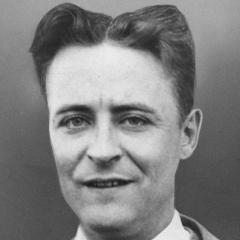
Author

F. Scott Fitzgerald
F. Scott Fitzgerald

F. Scott Fitzgerald was an American author of novels and short stories, renowned for his works that encapsulate the Jazz Age and the Roaring Twenties. His most celebrated novel, 'The Great Gatsby,' is a critical and commercial success, reflecting the themes of the American Dream and the decline of the American upper class. more

You May Also Like

“Naispotilas N soitti kirjoittajalle kertoakseen tarinansa: ”Olin nuorena töissä professorin kotiapulaisena. Töitäni lisättiin ja lopulta en niitä kaikkia jaksanut hoitaa, vaan väsyin liiaksi ja jäin sänkyyn makaamaan. Professorin rouva otti yhteyttä äitiini, joka toimitti minut Hattelmalan mielisairaalaan, vaikka en ollut mielisairas, vain väsynyt. En ollut ehtinyt pitkääkään aikaa olla potilaana, kun eräänä iltana hoitajat halusivat ajaa hiukseni. Ymmärsin, että kyse oli aivoleikkaukseen joutumisesta ja säikähdin sekä yritin kieltäytyä. Minun mieltäni ei kuitenkaan asiassa kuultu, äidiltäni oli kysytty jotakin. Aamulla minut nukutettiin ja heräsin side pään ympärillä, haavat ohimolla. Kesti pitkään, ennen kuin ymmärsin mitä minulle oli tapahtunut. Jouduin olemaan mielisairaalassa kymmenen vuotta. Leikkauksessa katkaistiin ilmeisesti unihermot, koska sen jälkeen en ole kyennyt kunnolla nukkumaan. Minusta on leikkauksen jälkeen tuntunut, että olen jotenkin erilainen kuin muut. Eniten minua on loukannut se, että minulta ei kysytty.”

“Joan felt that she would always be haunted and would always suffer that pang for Kells. She would never lie down in the peace and quiet of her home, wherever that might be, without picturing Kells, dark and forbidding and burdened, pacing some lonely cabin or riding a lonely trail or lying with his brooding face upturned to the lonely stars. Sooner or later he would meet his doom. It was inevitable. She pictured over that sinister scene of the dangling forms; but no — Kells would never end that way. Terrible as he was, he had not been born to be hanged. He might be murdered in his sleep, by one of that band of traitors who were traitors because in the nature of evil they had to be. But more likely some gambling-hell, with gold and life at stake, would see his last fight. These bandits stole gold and gambled among themselves and fought. And that fight which finished Kells must necessarily be a terrible one. She seemed to see into a lonely cabin where a log fire burned low and lamps flickered and blue smoke floated in veils and men lay prone on the floor — Kells, stark and bloody, and the giant Gulden, dead at last and more terrible in death, and on the rude table bags of gold and dull, shining heaps of gold, and scattered on the floor, like streams of sand and useless as sand, dust of gold — the Destroyer. ZANE GREY. THE BORDER LEGION (Kindle Locations 4367-4376).”

“But our energies are directed far more toward war. Hypnotized by mutual mistrust, almost never concerned for the species or the planet, the nations prepare for death. And because what we are doing is so horrifying, we tend not to think of it much. But what we do not consider we are unlikely to put right. Every thinking person fears nuclear war, and every technological state plans for it. Everyone knows it is madness, and every nation has an excuse.”

“Fradique looked intensely at me. 'You are the proof that God exists,' he said, 'and that he is quite mad'. He leaned towards me and kissed me, and I kissed him. Later we went back to looking at the maps, and played a game of chess. I asked him what he had meant when he spoke about God's madness. Fradique laughed. 'Only a thoroughly insane God could conceive of an angel, and then place her in Hell.”

“Filmovi, knjige, stripovi... Toliko je toga u popularnoj kulturi, što daje romantičnu notu ludilu. Toliko je toga što stvara iluziju da je prava ljubav jednaka ludilu, toliko je toga što tvrdi da se ludilo može voleti. Istina je, ja sam dokaz. Može se ludilo voleti, ali ludilo te ne može voleti. Kažu da treba vremena, da se ludilo može preboleti, ali dok preboljevaš, ništa te ne razlikuje od onog za čim patiš. Postaješ oštećen, prazan i lud. Ja sam on. On je ja. Druga strana istog ogledala.”

“One of the most studied ideas as to what causes schizophrenia is the 'chemical imbalance theory,' which derives psychiatric pharmaceuticals themselves. Though the 'mechanism of action' of drugs marketed for their 'antipsychotic' properties isn't understood--plainly, drug companies believe these drugs are effective in lessening psychiatric symptoms, but they don't actually know why--what is known is that they affect chemical levels in the brain. It's therefore supposed that abnormal chemical levels might somehow be crucial to understanding what's different about the brains of people diagnosed with schizophrenia. Testing chemical levels inside brains remains impossible. Despite billions of dollars of investigation, the chemical imbalance theory has never been confirmed.”

“It was past eight on a Friday night, so calling the Homeward to speak to Dr. Casbus was out of the question. The head nurse would never bother him this late. A sly idea struck me. Just because I couldn’t call the doctor, didn’t mean I couldn’t go see him in person. I’d gone to the Homeward at night before. On those nights when I’d been afraid for my mother, afraid she’d be scared, or missing me, or they would be hurting her with their treatments. The head nurse, Mrs. Huds didn’t like it, but Casbus always showed up to save me from her lecture on rules. He didn’t let me have a room to stay in—it wasn’t the Holiday Inn, but he’d let me stay long enough to dial down my fears a notch or two. And sometimes, I learned more about myself, like the last after-hours session, when Casbus had explained why I had holes in my memories.”