Quotessence
Home / Quotes / Quote by George Bernard Shaw

Quote by George Bernard Shaw

“On Monday last I sat without a murmur in a stuffy theatre on a summer afternoon from three to nearly half-past 6, spellbound by Ibsen; but the price I paid for it was to find myself stricken with mortal impatience and boredom the next time I attempted to sit out the pre-Ibsenite drama for five-minutes.”

Quote by George Bernard Shaw

Work

Dramatic Opinions and Essays, volume 2

Browse quotes and source details for this work. more

Author
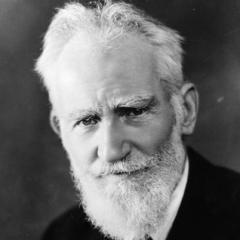
George Bernard Shaw
George Bernard Shaw

George Bernard Shaw (July 26, 1856 - November 2, 1950) was an Irish-British playwright, critic, and socialist. He is renowned for his satirical and witty dramatic works. more

You May Also Like

“This is not a conspiracy theory; it doesn’t have to be. Societies tell themselves necessary fictions in the same way that individuals and families do. Henrik Ibsen called them “vital lies,” and psychologist Daniel Goleman describes them working the same way on the social level that they do within families: “The collusion is maintained by directing attention away from the fearsome fact, or by repackaging its meaning in an acceptable format.” The costs of these social blind spots, he writes, are destructive communal illusions. Possibilities for women have become so open-ended that they threaten to destabilize the institutions on which a male-dominated culture has depended, and a collective panic reaction on the part of both sexes has forced a demand for counterimages.”

“[...] og at han la særlig vekt på å gjennomgå Ibsens dramaer med sine elever, da var det den andre kunne si: Ja, Ibsen, ja, han ligger nok for høyt for meg, eller: Nei, du vet, jeg har aldri kommet til å interessere meg for litteratur, og i dette lå det en beklagelse, og den var ikke deres egen, for de var jo så lite interessert i litteratur og Ibsens dramaer at de ikke så noen grunn til å beklage det, hva i himmelens navn var det de skulle beklage, for sin egen del? Nei, det var som samfunnsmennesker de fant det nødvendig å uttrykk denne beklagelse, altså beklagelse som et nødvendig uttrykk for den dannelse ethvert sivilisert samfunn søker å gi sine borgere, og som det, som man ser, i dette tilfellet hadde lykkes med. At enkle samtaler mellom gamle kjente som tilfeldigvis treffes etter noen år, arter seg slik, og ikke på stikk motsatt vis, på dette bygger et hvert sivilisert samfunn sine fundamenter, hadde han ofte tenkt, ikke minst i de siste åra.”

“[honest and talented American employees] spend so much time in mediocre meetings listening to superficial ideas presented by the powerful few at every workplace. Their hearts and minds are constantly agonizing as they see the mediocrity of the powerful few being praised by circles of cheerleaders found in most workplaces. The cheerleaders are usually there for the paycheck, and they do a great job in making mediocrity be mistaken for creativity and innovation.”

“The third person. There was no sign of this happiness on the outside, she knew. She was bored by this happiness that seemed out of place, impatient to get rid of it. The feeling was less pleasurable than she had imagined it might have been, less well-defined, and when she felt along its strings she found it was not easily traced or attached to the objects she thought it might have been attached to. Perhaps it was not attached to anything at all.”

“Even the darkest storms in our lives carve paths to our destinies, for every trial, every tear, and every stumble shapes the contours of who we become. These hardships, though painful, are not mere obstacles; they are the unseen architects of our strength, wisdom, and purpose, guiding us toward futures we could not have imagined.”

“ERNEST FRIEDLANDER: Be quiet! Be quiet! LEO MERCURÉ: Why should we be quiet? You’re making enough row to blast the roof off! Why should you have the monopoly of noise? Why should your pompous moral pretensions be allowed to hurdle across the city without any competition? We’ve all got lungs. Let’s use them! Let’s shriek like mad! Let’s enjoy ourselves!”

“What am I eliminating? The bourgeois infatuation with peaceful conservation of the past. This is a binding force, a thing which holds humankind into one vulnerable unit in spite of illusionary separations across parsecs of space. If I can find the scattered bits, others can find them. When you are together, you can share a common catastrophe. You can be exterminated together. Thus, I demonstrate the terrible danger of a gliding, passionless mediocrity, a movement without ambitions or aims. I show you that entire civilizations can do this thing. I give you eons of life which slips gently toward death without fuss or stirring, without even asking 'Why?' I show you the false happiness and the shadow-catastrophe called Leto, the God Emperor. Now, will you learn the real happiness?”