Quotessence
Home / Quotes / Quote by James Joyce

Quote by James Joyce

“The true aesthetic moment hangs in suspension between pornography and didacticism.”

Quote by James Joyce

Author
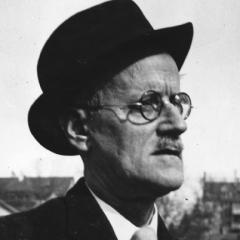
James Joyce
James Joyce

James Joyce, born on February 2, 1882, and died on January 13, 1941, was an Irish novelist and one of the greatest writers of the 20th century. Known for his unique narrative techniques and profound psychological insights, Joyce is celebrated for his contributions to modernist literature. His most famous work is 'Ulysses', which is considered one of the greatest literary works of the 20th century. Other notable works include 'Dubliners' and 'Finnegans Wake'. more

You May Also Like

“To the ordinary cultivated student of civilization the genesis of a Church is of little interest, and at all events we must not confound the history of a Church with its spiritual meaning. To the ordinary observer the English Church in history means Hooker and Jeremy Taylor — and should mean Andrewes also: it means George Herbert, and it means the churches of Christopher Wren. This is not an error: a Church is to be judged by its intellectual fruits, by its influence on the sensibility of the most sensitive and on the intellect of the most intelligent, and it must be made real to the eye by monuments of artistic merit. The English Church has no literary monument equal to that of Dante, no intellectual monument equal to that of St. Thomas, no devotional monument equal to that of St. John of the Cross, no building so beautiful as the Cathedral of Modena or the basilica of St. Zeno in Verona. But there are those for whom the City churches are as precious as any of the four hundred odd churches in Rome which are in no danger of demolition, and for whom St. Paul's, in comparison with St. Peter's, is not lacking in decency; and the English devotional verse of the seventeenth century — admitting the one difficult case of conversion, that of Crashaw — finer than that of any other country or religion at the time.”

“Sketchbooks are fascinating; they are a window into an artist's or designer's mind, revealing their unique way of looking at or thinking about the world. However, the sketchbook has become a much fetishised object featured in countless books, blog's and social-media accounts showcasing stylised and curated examples that few can emulate. It is no wonder that at some point on the Foundation course every student articulates anxiety or frustration over their own sketchbook: it's too big, too small, too messy, too contrived, I can't draw, what's it for? So why do we work with a sketchbook and what is it really for?”

“Lazy looking is not really looking at all. It is when we guess or approximate things. When you really interrogate what you are looking at and challenge yourself to use and invent a wide range of approaches to capturing what you see, your drawing's will start to reflect your unique way of looking.”

“This is the intangibility of genius--to create work that transfers from the canvas, the page, or the instrument into the heart of another person, arousing a longing for beauty and an end to sadness. This was what Vincent wanted to create--art that would transfer from his easel into someone else's soul to work as a balm of healing for the broken.”