Quotessence
Home / Quotes / Quote by William Peter Blatty

Quote by William Peter Blatty

Work

The Exorcist

The story revolves around a young girl possessed by a demonic entity and the efforts of two priests to perform an exorcism. The narrative delves into themes of faith, doubt, and the supernatural, blending Catholic theology with elements of horror. more
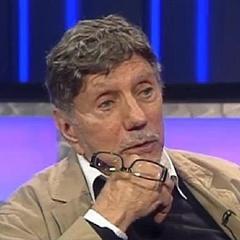
Author

William Peter Blatty

William Peter Blatty, born on January 7, 1928, and died on January 12, 2017, was an American writer known for his suspense and horror-themed works. His most famous novel, 'The Exorcist' published in 1971, was adapted into a highly successful film of the same name, winning him an Academy Award for Best Original Screenplay. Blatty's other works include 'The Dead Zone' and 'The Ninth配置文件'. more

You May Also Like

“The critical spirit rises up against itself and consumes its form. But instead of coming out of this process greater and purified, it devours itself in a kind of self-cannibalism and takes a morose pleasure in annihilating itself. Hyper-criticism eventuates in self-hatred, leaving behind it only ruins. A new dogma of demolition is born out of the rejection of dogmas. Thus we Euro-Americans are supposed to have only one obligation: endlessly atoning for what we have inflicted on other parts of humanity. How can we fail to see that this leads us to live off self-denunciation while taking a strange pride in being the worst? Self-denigration is all too clearly a form of indirect self-glorification. Evil can come only from us; other people are motivated by sympathy, good will, candor. This is the paternalism of the guilty conscience: seeing ourselves as the kings of infamy is still a way of staying on the crest of history.”

“It will never end. Till the world ends in the chaos of Ragnarok, we will fight for our women, for our land, and for our homes. Some Christians speak of peace, of the evil of war, and who does not want peace? But then some crazed warrior comes screaming his god's filthy name into your face and his only ambitions are to kill you, to rape your wife, to enslave your daughters, and take your home, and so you must fight.”

“Shall that be shut to man, which to the beast Is open? or will God incense his ire For such a petty trespass? and not praise Rather your dauntless virtue, whom the pain Of death denounced, whatever thing death be, Deterred not from achieving what might lead To happier life, knowledge of good and evil; Of good, how just? of evil, if what is evil Be real, why not known, since easier shunned? God therefore cannot hurt ye, and be just; Not just, not God: not feared then, nor obeyed: Your fear itself of death removes the fear. Why then was this forbid? Why, but to awe; Why, but to keep ye low and ignorant, His worshippers? He knows that in the day Ye eat thereof, your eyes, that seem so clear, Yet are but dim, shall perfectly be then Opened and cleared, and ye shall be as gods, Knowing both good and evil, as they know.”

“To the person who believes this- as the western world did up until a few centuries ago- this physical, sensible world is good because it proceeds from a divine source. The artist usually knows this by instinct; his senses, which are used to penetrating the concrete, tell him so. When Conrad said that his aim as an artist was to render the highest possible justice to the visible universe, he was speaking with the novelist's surest instinct. The artist penetrates the concrete world in order to find at its depths the image of its source, the image of ultimate reality. This in no way hinders his perception of evil but rather sharpens it, for only when the natural world is seen as good does evil become intelligible as a destructive force and a necessary result of our freedom.”

“The thing that's hard about it—the thing that makes it so hard when the person you love has been taken from you, not by something evil you could have seen coming but by random, pure chance—is that you find yourself suddenly living through a history other than the one you expected to live, through no fault of your own. I feel . . . it's hard to describe, but I feel weirdly outside of time. Ever since the accident I've had these moments when I felt like a visiting guest in this world, not a permanent resident. Like sometimes I look in a mirror and I feel like I can almost see through the version of me on the other side of the glass. And sometimes I feel like I can see the history I used to be in more clearly than the history I'm in now—the real history is one where Philip and Sean and I are all together, being a family and doing whatever family things people do, and this one's like . . . like a fake version of events that I've been yanked into, where everything's gone wrong.”