Quotessence
Home / Quotes / Quote by Anthony Burgess

Quote by Anthony Burgess

“Suddenly, I viddied what I had to do, and that was to do myself in; to snuff it, to blast off forever out of this wicked, cruel world. One moment of pain perhaps and, then, sleep forever, and ever and ever.”

Quote by Anthony Burgess

Work

A Clockwork Orange

A novel set in a dystopian future where the protagonist, Alex, is a violent teenager. The story delves into the consequences of his actions and the societal implications of his transformation through an experimental conditioning procedure. more
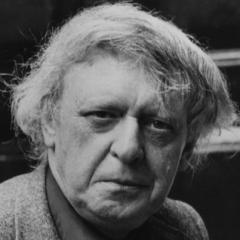
Author

Anthony Burgess
Anthony Burgess

Anthony Burgess, born on February 25, 1917, in Manchester, England, was an accomplished British writer known for his distinctive literary style and profound insights into human psychology. His works spanned various literary genres, including novels, plays, and poetry. Burgess' most famous novel, A Clockwork Orange, is one of the most celebrated works of the 20th century, exploring themes such as free will, morality, and social control. more

You May Also Like

“Some of the simplest of truths are also some of the most difficult of truths, but such is Christianity: 'If it's not about Christ, it's not about life.”

“We’ve made it private, contained it in family, when its audacity is in its potential to cross tribal lines. We’ve fetishized it as romance, when its true measure is a quality of sustained, practical care. We’ve lived it as a feeling, when it is a way of being. It is the elemental experience we all desire and seek, most of our days, to give and receive. The sliver of love’s potential that the Greeks separated out as eros is where we load so much of our desire, center so much of our imagination about delight and despair, define so much of our sense of completion. There is the love the Greeks called filia—the love of friendship. There is the love they called agape—love as embodied compassion, expressions of kindness that might be given to a neighbor or a stranger. The Metta of the root Buddhist Pali tongue, “lovingkindness,” carries the nuance of benevolent, active interest in others known and unknown, and its cultivation begins with compassion towards oneself.”

“Let us not despise the woman who is neither mother nor daughter nor wife. Let us not limit our esteem to family life, narrow our tolerance to simple egotism. Given that heaven rejoices more at the repentance of one sinner than over a hundred good men who have never sinned, let us endeavor to make heaven rejoice. We may be rewarded with interest. Let us leave along the path the alms of our forgiveness for those whose earthly desires have marooned them, so that a divine hope may save them, and, as the wise old women say when they prescribe a remedy of their own invention, if it doesn't help, at least it can't hurt.”

“If we are stretching to live wiser and not just smarter, we will aspire to learn what love means, how it arises and deepens, how it withers and revives, what it looks like as a private good but also a common good. I long to make this word echo differently in hearts and ears—not less complicated, but differently so. Love as muscular, resilient. Love as social—not just about how we are intimately, but how we are together, in public. I want to aspire to a carnal practical love—eros become civic, not sexual and yet passionate, full-bodied. Because it is the best of which we are capable, loving is also supremely exacting, not always but again and again. Love is something we only master in moments.”