“Occasionally they would hear a harsh croak or a splash as some amphibian was disturbed, but the only creature they saw was a toad as big as Will's foot, which could only flop in a pain-filled sideways heave as if it were horribly injured. It lay across the path, trying to move out of the way and looking at them as if it knew they meant to hurt it. 'It would be merciful to kill it,' said Tialys. 'How do you know?' said Lyra. 'It might still like being alive, in spite of everything.' 'If we killed it, we'd be taking it with us,' said Will. 'It wants to stay here. I've killed enough living things. Even a filthy stagnant pool might be better than being dead.' 'But if it's in pain?' said Tialys. 'If it could tell us, we'd know. But since it can't, I'm not going to kill it. That would be considering our feelings rather than the toad's.' They moved on.”
Quote by Philip Pullman
Book:The Amber Spyglass
Work
The Amber Spyglass
In this fantasy novel, the young protagonist embarks on a perilous quest in a magical world, facing numerous challenges and encountering fantastical creatures. more
Author
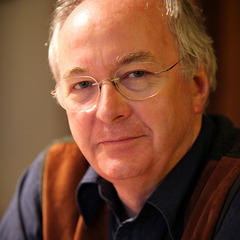
Philip Pullman
Philip Pullman is a British film writer known for his adaptations of literary works. Born in October 1946, he is a prolific writer who has adapted several renowned novels into film scripts. more
You May Also Like
Source: Enormous Changes at the Last Minute: Stories
Source: The Secret Garden
Source: O, These Men, These Men
“The past is a terrible place to live, but some people can make a home nowhere else.”
Source: Heart In Dixie
“We do not mourn the memories lost. We mourn the ones which beset us as loyal friends.”
Source: The Ninth Pawn of White - A Book of Unwritten Verses
Source: Our Chemical Hearts
“Magic, like nostalgia, was like a lie; empty and full all at once.”
Source: Wonderblood
Source: Worlds of Childhood: The Art and Craft of Writing for Children
“Old dreams are too beautiful the way they once were.”
Source: A Three-Year Minute
Source: Forest Dark