Quotessence
Home / Quotes / Quote by Neil Gaiman

Quote by Neil Gaiman

“Her eyes are grey. Her hair is straggly and wet. Her fingers are stubby. The nails are chewed and broken. Her teeth are crooked, jagged things. There is a vacancy in her gaze, a feeling of absence when you are near her that is impossible to put into words. Her sigil is the hooked ring. One day her hook will catch your heart. Describing her, we articulate what she is and why she is: when hope is past, she is there. She is in a thousand thousand waiting rooms and empty streets, in grey concrete buildings and anonymous hotels. She is on the other side of every mirror. When the eyes that look back at you know you too well, and no longer care for what they see, they are her eyes. She stands and waits, and in her posture the pain no longer tells you to live, and in her presence joy is unimaginable.”

Quote by Neil Gaiman

Work

The Sandman: Endless Nights

The Sandman: Endless Nights is a critically acclaimed graphic novel series written by Neil Gaiman. The series delves into the life and adventures of Dream, known as the Sandman, who is the personification of dreams and nightmares. The narrative weaves through various genres, including fantasy, horror, and literary fiction, creating a multifaceted and intricate story. The series is known for its deep themes, complex characters, and stunning artwork. more

Author
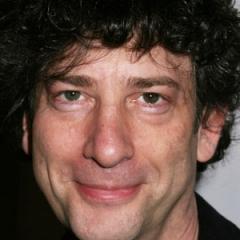
Neil Gaiman
Neil Gaiman

Neil Gaiman, born on November 10, 1960, is a renowned British author. His works span across various genres including fantasy, horror, and science fiction, with notable titles such as 'American Gods' and 'Good Omens'. Gaiman's writing style is distinctive and has won him a dedicated fan base. more

You May Also Like

“Anyone who cannot come to terms with his life while he is alive needs one hand to ward off a little his despair over his fate –he has little success in this –but with his other hand he can note down what he sees among the ruins, for he sees different (and more) things than do the others; after all, dead as he is in his own lifetime, he is the real survivor. This assumes that he does not need both hands, or more hands than he has, in his struggle against despair.”

“Manon died in the desert, but in the arms of the man who loved her with the the entire brilliance of his soul, who, when she was dead, dug a grave for her, and watered it with his tears, then buried his own heart within it.. While Marguerite, a Sinner like Manon, had died in a sumptuous bed... But in that desert of the heart, a more barren, a vaster, a more merciless desert, than that in which Manon had found her last resting place.”

“It was at Auschwitz that human beings underwent their first mutations. Without Auschwitz, there would have been no Hiroshima. Or genocide in Africa. Or attempts to dehumanize man by reducing him to a number, an object: it was at Auschwitz that the methods to be used were conceived, catalogued, and perfected. It was at Auschwitz that men mutilated and gambled with the future. The despair begotten at Auschwitz will linger for generations.”

“I notice that when the other person has been in despair for a prolonged period, I begin to feel myself crumbling into discouragement internally. One of the ways my system seeks to protect both me and the other person is to activate into helpful doing. Even though it is a psuedo-engagement, the intent is to shelter both of us from being engulfed in despair.”