Quotessence
Home / Quotes / Quote by Kurt Vonnegut

Quote by Kurt Vonnegut

“The human beings also passed canteens, which guards would fill with water. When food came in, the human beings were quiet and trusting and beautiful. They shared.”

Quote by Kurt Vonnegut

Work

SLAUGHTERHOUSE-FIVE

Kurt Vonnegut's Slaughterhouse-Five is a satirical and philosophical novel that combines elements of science fiction with the author's own experiences as a prisoner of war during the Allied bombing of Dresden. The narrative is non-linear and employs a time-traveling protagonist, Billy Pilgrim, who is haunted by his past and the events of the war. The book is known for its dark humor and its exploration of themes such as the absurdity of war, the nature of time, and the human condition. more
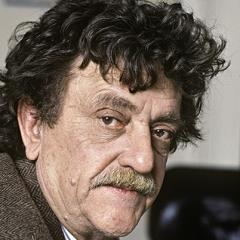
Author

Kurt Vonnegut
Kurt Vonnegut

Kurt Vonnegut was an American writer known for his unique humor and profound satire. His works often explore themes of war, humanity, society, and politics. His most famous works include 'Slaughterhouse-Five' and 'Cat's Cradle'. His writing style has been widely appreciated by readers and has had a profound impact on literature. more

You May Also Like

“He was telling her here, in this cellar, as he kissed her feet, he had understood love for the first time - not just from other people's words, but in his heart, in his blood. She was dearer to him than all his past, dearer to him than his mother, than Germany, than his future with Maria... He had fallen in love with her. Great walls raised up by states, racist fury, the heavy artillery and its curtain of fire were all equally insignificant, equally powerless in the face of love.. He gave thanks to fate for allowing him to understand this before he died.”

“Listen, we’ll come visit you. Okay? I’ll dress up as William Shakespeare, Lucent as Emily Dickinson, and beautiful ‘Ray’ as someone dashing and manly like Jules Verne or Ernest Hemingway...and we’ll write on your white-room walls. We’ll write you out of your supposed insanity. I love you, Micky Affias. -James (from "Descendants of the Eminent")”

“Remaining for a moment with the question of legality and illegality: United Nations Security Council Resolution 1368, unanimously passed, explicitly recognized the right of the United States to self-defense and further called upon all member states 'to bring to justice the perpetrators, organizers and sponsors of the terrorist attacks. It added that 'those responsible for aiding, supporting or harboring the perpetrators, organizers and sponsors of those acts will be held accountable.' In a speech the following month, the United Nations Secretary General Kofi Annan publicly acknowledged the right of self-defense as a legitimate basis for military action. The SEAL unit dispatched by President Obama to Abbottabad was large enough to allow for the contingency of bin-Laden's capture and detention. The naïve statement that he was 'unarmed' when shot is only loosely compatible with the fact that he was housed in a military garrison town, had a loaded automatic weapon in the room with him, could well have been wearing a suicide vest, had stated repeatedly that he would never be taken alive, was the commander of one of the most violent organizations in history, and had declared himself at war with the United States. It perhaps says something that not even the most casuistic apologist for al-Qaeda has ever even attempted to justify any of its 'operations' in terms that could be covered by any known law, with the possible exception of some sanguinary verses of the Koran.”

“He looked around at that one room, and the few things in it. He'd always thought retiring would be going back to his life after some nightmare pause. Some stretch of exile in the land of the dead. Now it came to him that all his life worth living had happened while he was holding a sword. Standing alongside his dozen. Laughing with Whirrun, and Brack, and Wonderful. Clasping hands with his crew before the fight, knowing he'd die for them and they for him. The trust, the brotherhood, the love, the knit closer than family. Standing by Threetrees on the walls of Uffrith, roaring their defiance at Bethod's great army. The day he charged at the Cunmur. And at Dunbrec. And in the High Places, even though they lost. The day he earned his name. Even the day he got his brothers killed. Even when he'd stood at the top of the Heroes as the rain came down, watching the Union come, knowing every dragged out moment might be the last. Like Whirrun said - you can't live more than that. Certainly not by fixing a chair.”

“It was sometimes feebly argued, as the political and military war against this enemy ran into difficulties, that it was 'a war without end.' I never saw the point of this plaintive objection. The war against superstition and the totalitarian mentality is an endless war. In protean forms, it is fought and refought in every country and every generation. In bin Ladenism we confront again the awful combination of the highly authoritarian personality with the chaotically nihilist and anarchic one. Temporary victories can be registered against this, but not permanent ones. As Bertold Brecht's character says over the corpse of the terrible Arturo Ui, the bitch that bore him is always in heat. But it is in this struggle that we develop the muscles and sinews that enable us to defend civilization, and the moral courage to name it as something worth fighting for.”

“American planes full of holes and wounded men and corpses took off backwards from an airfield in England. Over France a few German fighter planes flew at them backwards sucked bullets and shell fragments from some of the planes and crewmen. They did the same for wrecked American bombers on the ground and those planes flew up backwards to join the formation. The formation flew backwards over a German city that was in flames. The bombers opened their bomb bay doors exerted a miraculous magnetism which shrunk the fires gathered them into cylindrical steel containers and lifted the containers into the bellies of the planes. The containers were stored neatly in racks. The Germans below had miraculous devices of their own which were long steel tubes. They used them to suck more fragments from the crewmen and planes. But there were still a few wounded Americans though and some of the bombers were in bad repair. Over France though German fighters came up again made everything and everybody as good as new. When the bombers got back to their base the steel cylinders were taken from the racks and shipped back to the United States of America where factories were operating night and day dismantling the cylinders separating the dangerous contents into minerals. Touchingly it was mainly women who did this work. The minerals were then shipped to specialists in remote areas. It was their business to put them into the ground to hide them cleverly so they would never hurt anybody ever again.”