“American planes full of holes and wounded men and corpses took off backwards from an airfield in England. Over France a few German fighter planes flew at them backwards sucked bullets and shell fragments from some of the planes and crewmen. They did the same for wrecked American bombers on the ground and those planes flew up backwards to join the formation. The formation flew backwards over a German city that was in flames. The bombers opened their bomb bay doors exerted a miraculous magnetism which shrunk the fires gathered them into cylindrical steel containers and lifted the containers into the bellies of the planes. The containers were stored neatly in racks. The Germans below had miraculous devices of their own which were long steel tubes. They used them to suck more fragments from the crewmen and planes. But there were still a few wounded Americans though and some of the bombers were in bad repair. Over France though German fighters came up again made everything and everybody as good as new. When the bombers got back to their base the steel cylinders were taken from the racks and shipped back to the United States of America where factories were operating night and day dismantling the cylinders separating the dangerous contents into minerals. Touchingly it was mainly women who did this work. The minerals were then shipped to specialists in remote areas. It was their business to put them into the ground to hide them cleverly so they would never hurt anybody ever again.”
Quote by Kurt Vonnegut
Work
Kurt Vonnegut's Slaughterhouse-Five is a satirical and philosophical novel that combines elements of science fiction with the author's own experiences as a prisoner of war during the Allied bombing of Dresden. The narrative is non-linear and employs a time-traveling protagonist, Billy Pilgrim, who is haunted by his past and the events of the war. The book is known for its dark humor and its exploration of themes such as the absurdity of war, the nature of time, and the human condition. more
Author
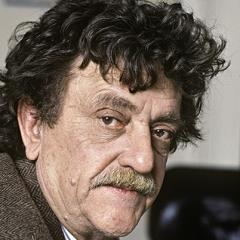
Kurt Vonnegut was an American writer known for his unique humor and profound satire. His works often explore themes of war, humanity, society, and politics. His most famous works include 'Slaughterhouse-Five' and 'Cat's Cradle'. His writing style has been widely appreciated by readers and has had a profound impact on literature. more
You May Also Like
“Even exciting places are boring most of the time. Wars. Movie sets. Emergency rooms.”