Quotessence
Home / Quotes / Quote by Susan Griffin

Quote by Susan Griffin

“The story of one life cannot be told separately from the story of other lives. Who are we? The question is not simple. What we call the self is part of a larger matrix of relationship and society. Had we been born to a different family, in a different time, to a different world, we would not be the same. All the lives that surround us are in us.”

Quote by Susan Griffin

Work

A Chorus of Stones: The Private Life of War

This book delves into the personal narratives of individuals touched by war, offering a nuanced and empathetic portrayal of the human cost of conflict. It examines the emotional, psychological, and social impacts of war on soldiers, civilians, and their communities, providing a rich tapestry of stories that shed light on the private lives of those in the midst of war. more

Author
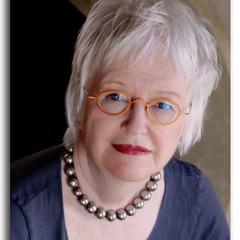
Susan Griffin
Susan Griffin

Susan Griffin is an influential American author, born on January 26, 1943. Her works cover a range of themes including feminism, history, literature, and ethics. Griffin is known for her profound critical thinking and sharp insights into social issues. more

You May Also Like

“The fuel you need should come from the core of who you are and the driving forces that cannot be turned off. Surface-level reasons will fade, goals for monetary gain are short-lived, and you need to determine what factors ignite your hunger, fuel your passion, and turn you into an unstoppable force.”

“We have dangerously warmed our world already, and our governments still refuse to take the actions necessary to halt the trend. There was a time when many had the right to claim ignorance. But for the past three decades, since the Intergovernmental Panel on Climate Change was created and climate negotiations began, this refusal to lower emissions has been accompanied with full awareness of the dangers. And this kind of recklessness would have been functionally impossible without institutional racism, even if only latent. It would have been impossible without Orientalism, without all the potent tools on offer that allow the powerful to discount the lives of the less powerful. These tools - of ranking the relative value of humans - are what allow the writing off of entire nations and ancient cultures. And they are what allowed for the digging up of all that carbon to begin with.”

“But I learned from these new books that Southerners think we are really rather sad. They have an idea of a people dwelling on a mountain, inbred, lonely, mysterious; that we ritually climb and descend, and make sacrifices, and burn eternal flames, and send bridal parties from village to village in the spring so men like Daila can impregnate women like me, all in order to placate something implacable. They see our culture as rich, in the same way perhaps that a seam of ancient ore is rich — because of compression and repression. They imagine that we drink a lot, even more than we do (and it is a thing I learned from the bar, that they drink as much as we, that every culture that’s discovered alcohol drinks too much) and that we are poorer than we are because only a few of us sell anything to them. A melancholy drunken land, a land of storytellers, a land of sly jokes, an Asam-hating land, and nothing like the land I remembered. It was as if someone had constructed a scaffolding around us, and then removed us and written only about the scaffolding. The more I read, the more the materials of the scaffolding — splintered wood, narrow pipes of metal — slid into the hollows of my bones. I knew that the next time I went to the mountain, I would have a stranger’s mind in mine. Though I walked in streets I had known since girlhood, I would never again be able to step upon them without an erudite word in my head and a bracing of metal in my marrow.”