Quotessence
Home / Quotes / Quote by Diana Wynne Jones

Quote by Diana Wynne Jones

“Howl backed into the door to shut it and leaned there in a tragic attitude. "Look at you all!" he said. "Ruin stares me in the face. I slave all day for you. And not one of you, even Calcifer, can spare time to say hello!" Calcifer said, "I never do say hello." "Is something wrong?" asked Sophie. "That's better," Howl said. "Some of you are pretending to notice me at last. Yes, something is wrong.”

Quote by Diana Wynne Jones

Work

Howl's Moving Castle

This novel is a classic in the fantasy genre, blending elements of romance, magic, and adventure. It tells the story of Sophie Hatter, a young woman who becomes an apprentice to the enigmatic wizard Howl. As she navigates the whimsical world of the Moving Castle, she discovers her own strength and the power of love. more

Author

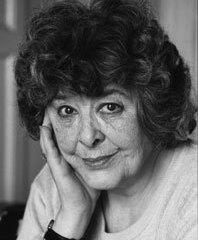
Diana Wynne Jones
Diana Wynne Jones

Diana Wynne Jones, a renowned British fantasy writer, was born on August 16, 1934, in Wales, UK, and passed away on March 26, 2011. Her works are known for their imaginative storytelling, deep themes, and richly developed characters, particularly in the realm of young adult fantasy literature. Notable works include 'The Magicians' Assistant' and 'The Time of the Ghost'. more

You May Also Like

“On that winter afternoon, the two boys hurried outside right after lunch, pulling enormous sleds that seemed almost larger than themselves. As they climbed the hill, they kept dodging sleds rushing past, packed with people of all ages. Most were children and teenagers, but there were also young adults and even respectable grown villagers. Sometimes grandparents came too, ‘to remember the old days.’ They rode together with their children or grandchildren, letting the younger ones steer. And after reaching the bottom – or tumbling halfway down – the ‘veterans’ laughed, shouted, and squealed with joy no less than the children. — Volodymyr Shablia, Stone. Book Two Context note: A happy moment of childhood joy and community life in a rural Ukrainian village – a reminder that even under repression, warmth and memory endured.”

“Cal's face swam into view. I couldn't hear him over the ringing in my ears. I'm pretty sure he mouthed for me to lie still, which seemed easy enough. He held my hand, and while the pain didn't go away, a woozy sense of calm spread over me. So I was pretty dispassionate as I rolled my head to the side and watched Cal pull a six-inch shared of demonglass out of my shoulder. As soon as it was out, the burning faded, but I knew I'd have yet another another scar. "That present sucked," I muttered.”

“As soon as Peter took off his coat and saw what his grandmother had cooked, he ran straight to the table and climbed into ‘his’ place – a large, sturdy wooden armchair with a small stool set on top of it. He bit eagerly into the pasty, taking large mouthfuls and greedily washing them down with milk. At one moment, the boy moved a little too abruptly, and a thin stream of warm milk escaped from the corner of his mouth, slid between cheek and chin, slipped under his collar, and disappeared on his chest, gently warming his skin. Peter wiped the spilled milk with his sleeve, took another pasty – then another, and another… Years later, this moment – so full of bright childhood sensations – would return to him night after night, haunting the hungry Peter, tormenting both soul and body in his sleep. Repeated endlessly, the dream would turn into suffering – a symbol of doom and unrealized hopes. And even within this seemingly kind dream, a Damoclean sword would hang over his mind: the impossibility, the futility of ever turning it into reality. — Volodymyr Shablia, Stone. Book Two Context note: A memory of warmth, abundance, and family love that later becomes a recurring dream for a starving prisoner. The contrast reveals how childhood comfort turns into psychological torment under hunger and repression.”