Quotessence
Home / Quotes / Quote by Ernest Hemingway

Quote by Ernest Hemingway

Work

Islands in the stream

Islands in the Stream is a complex narrative that intertwines the lives of three aging brothers, each at a different stage of life and facing their own personal challenges. The story is set against the backdrop of a changing America, reflecting the author's exploration of themes such as the nature of success, the pursuit of happiness, and the inevitable decline of youth. more

Author
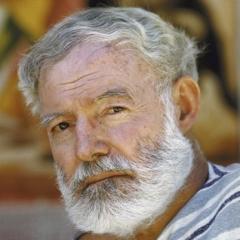
Ernest Hemingway
Ernest Hemingway

American author known for his concise and forceful writing style, as well as his profound insights into life. Hemingway's works cover a wide range of themes including war, adventure, and love, with notable titles such as 'The Old Man and the Sea' and 'A Farewell to Arms'. more

You May Also Like

“I want every breath, every laugh, every tear. Every taste of your mouth, every inch of your skin. I want to kneel at your feet, soaked in the blood of your enemies, then worship your body until you scream my name. I want to burn alive in that fire in your eyes. I want it to melt me down and forge me into the weapon you need me to be. I want to stand by your side for the rest of my life, and I don’t need you to marry me and make me a f-ing king to do it.”

“Und dann umarmte ich sie einfach. Alvas Hände umfassten meinen Rücken, und mit einem Mal fiel mir auf, wie ausgehungert ich all die Jahre gewesen war. Sie ließ mich nicht los, oder ich nicht sie. Ich glaube, wir standen eine volle Minute regungslos, einander fest umarmend auf dem Bahnsteig, und mir wurde bewusst, dass wir uns nach diesem Abend nicht mehr wiedersehen würden. Weil meine Zeit mit ihr unweigerlich in der Vergangenheit lag und weil ich das nicht ertrug.”

“Go into yourself. Find out the reason that commands you to write; see whether it has spread its roots into the very depths of your heart; confess to yourself whether you would have to die if you were forbidden to write. This most of all: ask yourself in the most silent hour of your night: must I write? Dig into yourself for a deep answer. And if this answer rings out in assent, if you meet this solemn question with a strong, simple “I must,” then build your life in accordance with this necessity; your whole life, even into its humblest and most indifferent hour, must become a sign and witness to this impulse. Then come close to Nature. Then, as if no one had ever tried before, try to say what you see and feel and love and lose... ...Describe your sorrows and desires, the thoughts that pass through your mind and your belief in some kind of beauty - describe all these with heartfelt, silent, humble sincerity and, when you express yourself, use the Things around you, the images from your dreams, and the objects that you remember. If your everyday life seems poor, don’t blame it; blame yourself; admit to yourself that you are not enough of a poet to call forth its riches; because for the creator there is not poverty and no poor, indifferent place. And even if you found yourself in some prison, whose walls let in none of the world’s sounds – wouldn’t you still have your childhood, that jewel beyond all price, that treasure house of memories? Turn your attentions to it. Try to raise up the sunken feelings of this enormous past; your personality will grow stronger, your solitude will expand and become a place where you can live in the twilight, where the noise of other people passes by, far in the distance. - And if out of this turning-within, out of this immersion in your own world, poems come, then you will not think of asking anyone whether they are good or not. Nor will you try to interest magazines in these works: for you will see them as your dear natural possession, a piece of your life, a voice from it. A work of art is good if it has arisen out of necessity. That is the only way one can judge it.”