Quotessence
Home / Quotes / Quote by Charles Dickens

Quote by Charles Dickens

“Weel, ma´am' said Stephen, making the best of it, with a smile; 'when I ha´finished off, I mun quit this part, and try another. Fortnet or misfortnet, a man can but try; there´s now to be done wi´out tryin -cept laying down and dying.”

Quote by Charles Dickens

Work

Hard Times

Charles Dickens' 'Hard Times' is a critical examination of the social and economic conditions during the Industrial Revolution. The story is set in the fictional town of Coketown and follows the lives of several characters, including the young Tom Gradgrind and his family. The novel delves into the impact of industrialization on society, the dehumanization of labor, and the importance of empathy and understanding in human relationships. more

Author

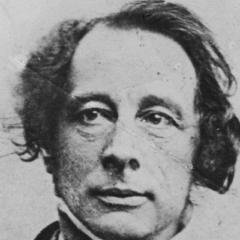
Charles Dickens
Charles Dickens

Charles Dickens, a British writer born on February 7, 1812, and died on June 9, 1870, is one of the greatest novelists of the 19th century. Known for his profound social criticism and vivid narrative style, Dickens' works extensively cover social reality, revealing various issues in the British society of the time. more

You May Also Like

“Charles Francis Adams was singular for mental poise — absence of self-assertion or self-consciousness — the faculty of standing apart without seeming aware that he was alone — a balance of mind and temper that neither challenged nor avoided notice, nor admitted question of superiority or inferiority, of jealousy, of personal motives, from any source, even under great pressure.”

“We are not worthy to unloose the latchets of Jesus' shoes, because, if we do, we begin to say to ourselves, "What great folks are we; we have been allowed to loose the latchets of the Lord's sandals." If we do not tell somebody else about it with many an exultation, we at least tell ourselves about it, and feel that we are something after all, and ought to be held in no small repute.”

“Humble individuals will not willfully distort information in order to defend, repair, or verify their own image. For humble people, there should be no press toward self-importance and no burning need to see—or present—themselves as being better than they actually are. They should also not be particularly interested in dominating others in order to receive entitlements or to elevate their own status. On the other hand, humility should not lead people to take harsh or condemning approaches toward themselves, magnifying weaknesses and severely punishing failures while overlooking strengths and successes.”

“Humility is a Divine property and the perfection of the Christian life. It is attained through obedience. He who is not obedient cannot gain humility. There are very few in the world today who have obedience. Our humility is in proportion to our obedience.”