Quotessence
Home / Quotes / Quote by Joshua Reynolds

Quote by Joshua Reynolds

Work

Darkly Dreaming

Browse quotes and source details for this work. more
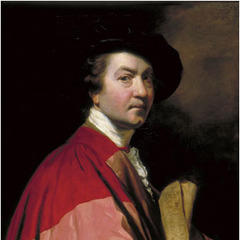
Author

Joshua Reynolds
Joshua Reynolds

Joshua Reynolds was an influential English painter, recognized for his portraits and landscapes. Born on July 16, 1723, and passing away on February 23, 1792, Reynolds played a significant role in the development of the English portrait school and is often considered the first president of the Royal Academy of Arts. more

You May Also Like

“Men tillige med denne U-ligheds Ophævelse, forsvandtes all Æmulation; saa at de, som tilforn havde søgt at distingvere sig ved Videnskab og Flittighed, for at nyde de Embeder, som vare best aflagde, bleve lunkne i deres Studeringer; og, naar nogen bebreydede dem saadant, svarede de: Hvad nytter det, at vi distingvere os blant andre, naar Belønningerne ere lige?og havde de derudi ikke U-ret.”

“For the greater part of human history, and in places in the world today, common resources were the rule. But some invented a different story, a social construct in which everything ins a commodity to be bought and sold. The market economy story has spread like wildfire, with uneven results for human well-being and devastation for the natural world. But it it just a story we have told ourselves and we are free to tell another, to reclaim the old one.”

“The focus on the market has made most economists neglect vast areas of our economic life, with significant negative consequences for our well-being. The neglect of production at the expense of exchange has made policy-makers in some countries overly complacent about the decline of their manufacturing industries. The view of individuals as consumers, rather than producers, has led to the neglect of issues such as the quality of work (e.g., how interesting it is, how safe it is, how stressful it is and even how oppressive it is) and work-life balance. The disregard of these aspects of economic life partly explains why most people in the rich countries don’t feel more fulfilled despite consuming the greatest ever quantities of material goods and services. The economy is much bigger than the market. We will not be able to build a good economy — or a good society — unless we look at the vast expanse beyond the market.”

“Self-centrism creates another problem on the response side. The problem with commercially motivated technological change is that if it does not make good business, the idea does not see its growth. Sanitation and clean water is still a problem in localities where everyone has 4G connection and mobile wallet accounts. Commercially motivated research is more intensely pursued than socially urgent ones. Technological improvements to ease sanitation, bring clean water and achieve recycling are given less attention than telecommunication and digital financial services which are commercially more profitable ventures.”

“Education geared to industry demands has also got into the trap of producing commercial technologists for corporations. These corporations are not built for social responsibility in free-market capitalism. Milton Friedman said the biggest and only responsibility of a corporation is to increase shareholders’ wealth. If these corporations do research and find a vaccine eventually that costs $1,000, then those who are not able to afford it would be regarded by mainstream economists as having less willingness to pay. For the poor, it is not a choice, but a helpless situation. But, poor having less budget for essential needs is a problem that we do not start our economics textbooks with.”

“In the earlier era, the subject of economics was geared to human needs. Now, the prime emphasis is on market behaviour and market outcomes based on choices under uncertainty and scarcity. The emphasis on choice behaviour subtly and inadvertently makes economics and most of its contents largely irrelevant for poor people.”