Quotessence
Home / Quotes / Quote by Erin Morgenstern

Quote by Erin Morgenstern

“He returns to the blur of velvet and firelight in the main room, kicking off his shoes as he walks, managing to remove his suit jacket and vest before he reaches the bed but he is asleep before he can deal with additional buttons, linen sheets, and lamb's-wool pillows swallowing him like a cloud and he welcomes it, his last thoughts before sleeping a fleeting mix of reflections on the evening that has finally ended, questions and worries about everything from his sanity to hot to get paint out of his hair and then it is gone, the last wisp of thought wondering how you go to sleep if you're already dreaming.”

Quote by Erin Morgenstern

Work

The Starless Sea

Browse quotes and source details for this work. more

Author

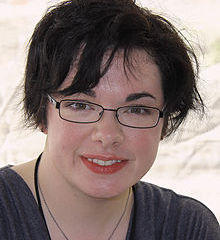
Erin Morgenstern
Erin Morgenstern

Erin Morgenstern is an American author born on July 8, 1978. Her works are known for their fantasy elements and literary quality, with her most famous novel being 'The Night Circus'. Her writing is poetic and skilled at creating imaginative story worlds. more

You May Also Like

“A story is like an egg, a universe contained in its chosen medium. The spark of something new and different but fully formed and fragile. In need of protection. You want to protect it, too, but there's more to it than that. You want to be inside it (...). You want to be in the story, not observing it from the outside. You want to be under the shell. The only way to do that is to break it. But if it breaks, it is gone.”

“The type of mind that can understand good fiction is not necessarily the educated mind, but it is at all times the kind of mind that is willing to have its sense of mystery deepened by contact with reality, and its sense of reality depend by contact with mystery. Fiction should be both canny and uncanny. In a good deal of popular criticism, there is the notion operating that all fiction has to be about the Average Man, and has to depict average ordinary everyday life, that every fiction writer must produce what used to be called "a slice of life." But if life, in that sense, satisfied us, there would be no sense in producing literature at all.”

“Yorick's Used and Rare Books had a small storefront on Channing but a deep interior shaded by tall bookcases crammed with history, poetry, theology, antiquated anthologies. There was no open wall space to hang the framed prints for sale, so Hogarth's scenes of lust, pride, and debauchery leaned rakishly against piles of novels, folk tales, and literary theory. In the back room these piles were so tall and dusty that they took on a geological air, rising like stalagmites. Jess often felt her workplace was a secret mine or quarry where she could pry crystals from crevices and sweep precious jewels straight off the floor. As she tended crowded shelves, she opened one volume and then another, turning pages on the history of gardens, perusing Edna St. Vincent Millay: "We were very tired, were very merry, / We had gone back and forth all night on the ferry..." dipping into Gibbon: "The decline of Rome was the natural and inevitable effect of immoderate greatness. Prosperity ripened the principle of decay..." and old translations of Grimm's Fairy Tales: "They walked the whole day over meadows, fields, and stony places. And when it rained, the little sister said, 'Heaven and our hearts are weeping together...”