Quotessence
Home / Quotes / Quote by Ta-Nehisi Coates

Quote by Ta-Nehisi Coates

“In Cold War America, homeownership was seen as a means of instilling patriotism, and as a civilizing and anti-radical force. "No man who owns his own house and lot can be a Communist," claimed William Levitt, who pioneered the modern suburb with the development of his Levittowns, his famous planned communities. "He has too much to do.”

Quote by Ta-Nehisi Coates

Work

We Were Eight Years in Power: An American Tragedy

This book is a compilation of essays that delve into the political and social dynamics of the United States during a specific eight-year period. The author examines the complexities of race, identity, and power, offering insights into the political climate of the time. more

Author
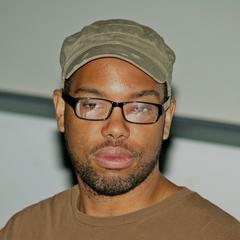
Ta-Nehisi Coates
Ta-Nehisi Coates

Ta-Nehisi Coates is an American writer known for his insightful social commentary and literary works. His writings often focus on themes of race, history, and social justice, with his most famous work being 'Between the World and Me', which won the Pulitzer Prize in 2015. more

You May Also Like

“Sooner or later every gardener must face the fact that certain things are going to die on him. It is a temptation to be anthropomorphic about plants, to suspect they do it to annoy. One knows, after all, that they lead lives of their own: plant the lily bulb in the center of the bed and watch it come up under a brick near the edge; pull up a sick little bush and throw it on the compost heap, and ten to one, it will obstinately revive. Usually, though, gardening failures, like airplane crashes, are the result of 'human error', of not reading the directions or paying attention.”

“Whatever the question up for discussion as to wrongs, injustice, inequality, maladministration of the law, Miss Anthony would always say, 'Well, now when women get the ballot all that will be changed.' So I asked her one day, 'Miss Anthony, do you really believe that the millennium is going to come when women get the ballot? Knowing women as I do, and their petty outlook on life, although I believe that it is right that they should have the vote, I do not believe that the exercise of the vote is going to change women's nature nor the political situation.' Miss Anthony seemed a little bit startled, but she did not make any contention on that point.”

“What is your impression of American editorial cartooning? I met two kinds of editorial cartoonists. Some of them, they deal with local and domestic issues and they never focus on U.S. foreign policy. One of them is Tom Toles, and I feel like he is not serving the people. And the others deal with international issues and understand the oppression and the suffering caused to other nations. One of them is Kal in The Economist. Really, I've started to change my mind and, you know what? I am going to be an international cartoonist. On the professional level, I was really impressed with Callahan's work--he talks about serious issues. I was so excited to meet such an iconic figure. The one lady, Jen [Sorensen], I felt like she deals more with international issues. (2011 interview with Cartoon Movement)”

“Q: Who are your influences? I was lucky as a kid to get to meet Paul Conrad who lived in my hometown. He is a giant in editorial cartooning, winner of three Pulitzers and even more impressively he won a place on Nixon‘s enemies list. He was a huge influence. Starting out I also spent a lot of time looking at Ron Cobb, an insane crosshatcher who drew for the alternative press in the ’60’s, as well as David Levine, Ed Sorel, and R. Crumb. I also love Steinberg‘s visual elegance and innately whimsical voice. Red Grooms is another guy who took cartooning wonderful places. There are also a number of 19th-century cartoonists whose mad drawing skills and ability to create rich visual worlds always impressed me. A.B. Frost, T.S. Sullivant, Joseph Keppler are often overshadowed by Nast, but in many ways they were more adventurous graphically. I also want to throw in here how great it is to work in D.C. There’s a great circle of cartoonists here and being in their orbit is a daily inspiration. Opening the Post to Toles and Richard Thompson (Richard’s Poor Almanac is the best and most original cartoon in the country and sadly known mostly only to those lucky enough to be in range of the Post;, Cul de Sac is pretty good too). And then there’s Ann Telnaes’ animations that appear in the Post online—-truly inspired and the wave of the future, as well as Beeler, Galifianakis, Bill Brown, and others. It raises one’s game to be around all these folks. (2010 interview with Washington City Paper)”

“Looking at our history, I can see why this would be true. The role of the Chicana has been a very strong one, although a silent one. When the woman has seen the suffering of her people, she has always responded bravely and as a totally committed and equal human. My mother told me of how, during the time of Pancho Villa and the revolution in Mexico, she saw the men march through the village continually for three days and then she saw the battalion of women marching for a whole day. The women carried food and supplies; also, they were fully armed and wearing loaded "carrilleras." In battle, they fought alongside the men. Out of the Mexican revolution came the revolutionary personage "Adelita," who wore her rebozo crossed at the bosom as a symbol of a revolutionary woman in Mexico.”

“No se me importa un pito que las mujeres tengan los senos como magnolias o como pasas de higo; un cutis de durazno o de papel de lija. Le doy una importancia igual a cero, al hecho de que amanezcan con un aliento afrodisíaco o con un aliento insecticida. Soy perfectamente capaz de sorportarles una nariz que sacaría el primer premio en una exposición de zanahorias; ¡pero eso sí! -y en esto soy irreductible- no les perdono, bajo ningún pretexto, que no sepan volar. Si no saben volar ¡pierden el tiempo las que pretendan seducirme!”