Quotessence
Home / Quotes / Quote by Dante Alighieri

Quote by Dante Alighieri

Work

The Divine Comedy of Dante Alighieri, Volume 2: Purgatorio

Browse quotes and source details for this work. more

Author
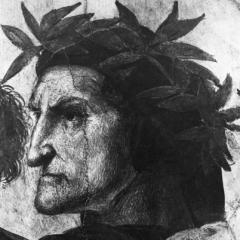
Dante Alighieri
Dante Alighieri

Dante Alighieri, an Italian poet and a pioneer of the Renaissance, is hailed as the father of Italian literature. Born in 1265 and died on September 14, 1321, Dante is best known for his epic poem, 'The Divine Comedy,' which is not only a great literary work but also a profound religious and philosophical treatise. more

You May Also Like

“Quick as a flash, Sawney Rath's eyes hardened. "Then I'm ordering you to skin Felch alive!" He took the otter's paw, closing it over the knife handle. "Obey me!" The crowded clearing became as silent as a tomb. All eyes were upon the Taggerung, awaiting his reaction to the order. Tagg turned his back on Sawney and strode to the side of the fox strung up to the beech bough. He raised the blade. Felch shut his eyes tight, his head shaking back and forth as his nerves quivered uncontrollably. With a sudden slash Tagg severed the thongs that bound him. Felch slumped to the ground in a shaking heap. Tagg's voice was flat and hard as he turned to face Sawney. "I'm sorry to disobey your order. The fox is a sorry thief, but I will not take the life of a helpless beast.”

“Proximity has taught me some basic and humbling truths, including this vital lesson: Each of us is more than the worst thing we've ever done. My work with the poor and the incarcerated has persuaded me that the opposite of poverty is not wealth; the opposite of poverty is justice. Finally, I've come to believe that the true measure of our commitment to justice, the character of our society, our commitment to the rule of law, fairness, and equality cannot be measured by how we treat the rich, the powerful, the privileged, and the respected among us. The true measure of our character is how we treat the poor, the disfavored, the accused, the incarcerated, and the condemned. We are all implicated when we allow other people to be mistreated. An absence of compassion can corrupt the decency of a community, a state, a nation. Fear and anger can make us vindictive and abusive, unjust and unfair, until we all suffer from the absence of mercy and we condemn ourselves as much as we victimize others. The closer we get to mass incarceration and extreme levels of punishment, the more I believe it's necessary to recognize that we all need mercy, we all need justice, and - perhaps - we all need some measure of unmerited grace.”