Quotessence
Home / Quotes / Quote by Kurt Vonnegut

Quote by Kurt Vonnegut

“During the Vietnam War... every respectable artist in this country was against the war. It was like a laser beam. We were all aimed in the same direction. The power of this weapon turns out to be that of a custard pie dropped from a stepladder six feet high.”

Quote by Kurt Vonnegut

Author
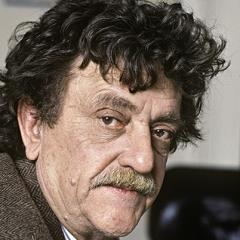
Kurt Vonnegut
Kurt Vonnegut

Kurt Vonnegut was an American writer known for his unique humor and profound satire. His works often explore themes of war, humanity, society, and politics. His most famous works include 'Slaughterhouse-Five' and 'Cat's Cradle'. His writing style has been widely appreciated by readers and has had a profound impact on literature. more

You May Also Like

“Oh God just look at me now... one night opens words and utters pain... I cannot begin to explain to you... this... I am not here. This is not happening. Oh wait, it is, isn't it? I am a ghost. I am not here, not really. You see skin and cuts and frailty...these are symptoms, you known, of a ghost. An unclear image with unclear thoughts whispering vague things... If I told you what was really in my head, you''d never let me leave this place. And I have no desire to spend time in hell while I'm still, in theory, alive.”

“Perception requires imagination because the data people encounter in their lives are never complete and always equivocal. For example, most people consider that the greatest evidence of an event one can obtain is to see it with their own eyes, and in a court of law little is held in more esteem than eyewitness testimony. Yet if you asked to display for a court a video of the same quality as the unprocessed data catptured on the retina of a human eye, the judge might wonder what you were tryig to put over. For one thing, the view will have a blind spot where the optic nerve attaches to the retina. Moreover, the only part of our field of vision with good resolution is a narrow area of about 1 degree of visual angle around the retina’s center, an area the width of our thumb as it looks when held at arm’s length. Outside that region, resolution drops off sharply. To compensate, we constantly move our eyes to bring the sharper region to bear on different portions of the scene we wish to observe. And so the pattern of raw data sent to the brain is a shaky, badly pixilated picture with a hole in it. Fortunately the brain processes the data, combining input from both eyes, filling in gaps on the assumption that the visual properties of neighboring locations are similar and interpolating. The result - at least until age, injury, disease, or an excess of mai tais takes its toll - is a happy human being suffering from the compelling illusion that his or her vision is sharp and clear. We also use our imagination and take shortcuts to fill gaps in patterns of nonvisual data. As with visual input, we draw conclusions and make judgments based on uncertain and incomplete information, and we conclude, when we are done analyzing the patterns, that out “picture” is clear and accurate. But is it?”