Quotessence
Home / Quotes / Quote by Thomas Jefferson

Quote by Thomas Jefferson

“How little do my countrymen know what precious blessings they are in possession of, and which no other people on earth enjoy!”

Quote by Thomas Jefferson

Author
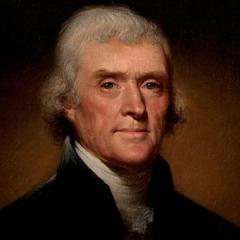
Thomas Jefferson
Thomas Jefferson

Thomas Jefferson was the third President of the United States, a distinguished politician, philosopher, architect, and scientist. He was born on April 13, 1743, and died on July 4, 1826. Jefferson advocated for democracy and freedom in politics and was one of the main authors of the Declaration of Independence. His political ideas had a profound impact on the founding and development of the United States. more

You May Also Like

“Modern man lives under the illusion that he knows 'what he wants,' while he actually wants what he is supposed to want. In order to accept this it is necessary to realize that to know what one really wants is not comparatively easy, as most people think, but one of the most difficult problems any human being has to solve. It is a task we frantically try to avoid by accepting ready-made goals as though they were our own.”

“A democracy cannot exist as a permanent form of government. It can only exist until the people discover they can vote themselves largess out of the public treasury. From that moment on, the majority always votes for the canidate promising the most benefits from the public treasury, with the result that democracy always collapses over a loose fiscal policy--to be followed by a dictatorship.”

“If you analyze it I believe the very heart and soul of conservatism is libertarianism. I think conservatism is really a misnomer just as liberalism is a misnomer for the liberals — if we were back in the days of the Revolution, so-called conservatives today would be the Liberals and the liberals would be the Tories. The basis of conservatism is a desire for less government interference or less centralized authority or more individual freedom and this is a pretty general description also of what libertarianism is.”

“Conventional belief holds that after triumphing over a mid-career bout with polio, FDR went on to serve two vigorous terms as gov- ernor of New York and three-plus more as president of the United States, succumbing unexpectedly to a stroke on April 12, 1945. In truth, Franklin spent those eventful twenty-four years battling swarms of maladies including polio’s ongoing crippling effects, life-threatening gastrointestinal bleeding, two incurable cancers, severe cardiovascular disease, and epilepsy.”