Quotessence
Home / Quotes / Quote by Louise Glück

Quote by Louise Glück

“Gretel in Darkness: This is the world we wanted. All who would have seen us dead are dead. I hear the witch's cry break in the moonlight through a sheet of sugar: God rewards. Her tongue shrivels into gas.... Now, far from women's arms And memory of women, in our father's hut we sleep, are never hungry. Why do I not forget? My father bars the door, bars harm from this house, and it is years. No one remembers. Even you, my brother, summer afternoons you look at me as though you meant to leave, as though it never happened. But I killed for you. I see armed firs, the spires of that gleaming kiln-- Nights I turn to you to hold me but you are not there. Am I alone? Spies hiss in the stillness, Hansel we are there still, and it is real, real, that black forest, and the fire in earnest.”

Quote by Louise Glück

Author
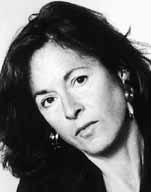
Louise Glück
Louise Glück

Louise Glück (born April 22, 1943) is an American poet and essayist, awarded the Nobel Prize in Literature in 2020. Born in New York City to Hungarian Jewish immigrants, she developed a passion for poetry early in life. She studied at Sarah Lawrence College and Columbia University. Glück's poetry is known for its precise, austere language and deep psychological insight, often exploring themes of family, love, death, and nature. Her major works include 'The Wild Iris' (1992), 'The Seven Ages' (2001), and 'Faithful and Virtuous Night' (2014). She has received numerous honors, including the Pulitzer Prize for Poetry and the National Book Award, and served as U.S. Poet Laureate from 2003 to 2004. Her works have been translated into many languages and have had a profound impact on contemporary poetry. more

You May Also Like

“Soon I found myself co-leading a small group of people wrestling with their own pain, questions, and disappointments. Even when I felt too bleak to inspire any of them, I knew this was where I needed to be. Because of my rejection I saw and understood the pain of a whole new demographic of people. I had a more profound acceptance of a gray world where things weren’t as black and white as I thought they were. I had much more grace and love for others who hadn’t made the wisest choices in life. No experience is wasted.”

“I believe in a path back. I believe accountability can be a step toward greater wholeness, personally and as a movement. The project of building toward collective liberation is too important and too difficult to permanently cut people out when they make mistakes. We cannot afford it. Simply firing and excluding people who harass is a practice that mirrors the ultimately ineffective approach of the criminal justice system.”

“So many of us have histories of trauma that come from generations of people forced from our land, bent and twisted by patriarchy, slavery, and genocide. If we simply fire those unable to carry those histories, those who perpetuate harmful lessons they were forced to learn, we will lose.”

“Now I realize he lied twice to me yesterday: he knew who my grandmother was. Maybe he had hoped I’d lead him to her. Not to kill her, as Leo had suspected, but for closure. The monster and the girl who could rescue him: obviously, he was reading his life story into her fiction. It was why he had saved her years ago; it was why, now, he needed to know if he would be redeemed or condemned.”

“On train trips, Ernie always wanted the window seat. He knew the names of the trees we passed, and the clouds—nacreous, cumulus, nimbus. He was ever vigilant for animal life and appreciative of the tiny patches of humanity along the tracks that exposed the lives of the rail-side dwellers in such intimate detail. “I love sad houses,” he’d say, pointing to a chorus line of discoloured laundry waving at us, to an upturned self-propelled lawnmower, straggly gardens, leaky drainpipes, a rain-weathered pram that had been turned into a wheelbarrow. “The porch lights are on to keep the rats in their dens,” he’d said. To be a voyeur of decay at such close range was as much of an enthrallment as it was a validation of the scarcities in his own backyard. I knew exactly which days Ernie’s mum had had to choose between heating the house and putting food on the table. My mother had been there too. Before the Zipper had given her a leg up.”