Quotessence
Home / Quotes / Quote by Raoul Vaneigem

Quote by Raoul Vaneigem

Work

The revolution of everyday life

This book delves into the ways in which ordinary experiences and actions can lead to significant social transformations, offering a critical analysis of the potential for revolution in daily life. more

Author
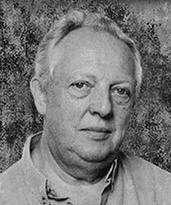
Raoul Vaneigem
Raoul Vaneigem

Raoul Vaneigem is a Belgian writer known for his critical analysis of consumerism and modern life. His work primarily focuses on issues of personal freedom, social change, and the essence of human existence. more

You May Also Like

“We sensible often resist intrusive love and its chaos practically, employing measures to prevent the former for fear of the latter. But for all our wit and work, that desperation for control also prevents the pure, transcendental freedom more often delivered by both.”

“The same teen who can't legally operate a four-wheeler, or [ATV]...in a farm lane workplace environment can operate a jacked-up F-250 pickup on a crowded urban expressway. By denying these [farm work] opportunities to bring value to their own lives and the community around them, we've relegated our young adults to teenage foolishness. Then as a culture we walk around shaking our heads in bewilderment at these young people with retarded maturity. Never in life do people have as much energy as in their teens, and to criminalize leveraging it is certainly one of our nation's greatest resource blunders.”

“Intellectual 'work' is misnamed; it is a pleasure, a dissipation, and is its own highest reward. The poorest paid architect, engineer, general, author, sculptor, painter, lecturer, advocate, legislator, actor, preacher, singer, is constructively in heaven when he is at work; and as for the magician with the fiddle-bow in his hand, who sits in the midst of a great orchestra with the ebbing and flowing tides of divine sound washing over him - why, certainly he is at work, if you wish to call it that, but lord, it's a sarcasm just the same. The law of work does seem utterly unfair - but there it is, and nothing can change it: the higher the pay in enjoyment the worker gets out of it, the higher shall be his pay in cash also.”

“Connection is health. And what our society does its best to disguise from us is how ordinary, how commonly attainable, health is. We lose our health - and create profitable diseases and dependences - by failing to see the direct connections between living and eating, eating and working, working and loving. In gardening, for instance, one works with the body to feed the body. The work, if it is knowledgeable, makes for excellent food. And it makes one hungry. The work thus makes eating both nourishing and joyful, not consumptive, and keeps the eater from getting fat and weak. This is health, wholeness, a source of delight. (pg.132, The Body and the Earth)”

“The acquisition by dishonest means and cunning,' said Levin, feeling that he was incapable of clearly defining the borderline between honesty and dishonesty. 'Like the profits made by banks,' he went on. 'This is evil, I mean, the acquisition of enormous fortunes without work, as it used to be with the spirit monopolists. Only the form has changed. Le roi est mort, vive le roi! Hardly were the monopolies abolished before railways and banks appeared: just another way of making money without work.”