Quotessence
Home / Quotes / Quote by Northrop Frye

Quote by Northrop Frye

“Themes of descent often turn on the struggle between the titanic and the demonic within the same person or group. In Moby Dick, Ahab’s quest for the whale may be mad and “monomaniacal,” as it is frequently called, or even evil so far as he sacrifices his crew and ship to it, but evil or revenge are not the point of the quest. The whale itself may be only a “dumb brute,” as the mate says, and even if it were malignantly determined to kill Ahab, such an attitude, in a whale hunted to the death, would certainly be understandable if it were there. What obsesses Ahab is in a dimension of reality much further down than any whale, in an amoral and alienating world that nothing normal in the human psyche can directly confront. The professed quest is to kill Moby Dick, but as the portents of disaster pile up it becomes clear that a will to identify with (not adjust to) what Conrad calls the destructive element is what is really driving Ahab. Ahab has, Melville says, become a “Prometheus” with a vulture feeding on him. The axis image appears in the maelstrom or descending spiral (“vortex”) of the last few pages, and perhaps in a remark by one of Ahab’s crew: “The skewer seems loosening out of the middle of the world.” But the descent is not purely demonic, or simply destructive: like other creative descents, it is partly a quest for wisdom, however fatal the attaining of such wisdom may be. A relation reminiscent of Lear and the fool develops at the end between Ahab and the little black cabin boy Pip, who has been left so long to swim in the sea that he has gone insane. Of him it is said that he has been “carried down alive to wondrous depths, where strange shapes of the unwarped primal world glided to and fro . . . and the miser-merman, Wisdom, revealed his hoarded heaps.” Moby Dick is as profound a treatment as modern literature affords of the leviathan symbolism of the Bible, the titanic-demonic force that raises Egypt and Babylon to greatness and then hurls them into nothingness; that is both an enemy of God outside the creation, and, as notably in Job, a creature within it of whom God is rather proud. The leviathan is revealed to Job as the ultimate mystery of God’s ways, the “king over all the children of pride” (41:34), of whom Satan himself is merely an instrument. What this power looks like depends on how it is approached. Approached by Conrad’s Kurtz through his Antichrist psychosis, it is an unimaginable horror: but it may also be a source of energy that man can put to his own use. There are naturally considerable risks in trying to do so: risks that Rimbaud spoke of in his celebrated lettre du voyant as a “dérèglement de tous les sens.” The phrase indicates the close connection between the titanic and the demonic that Verlaine expressed in his phrase poète maudit, the attitude of poets who feel, like Ahab, that the right worship of the powers they invoke is defiance.”

Quote by Northrop Frye

Work

Words with Power: Being a Second Study of the Bible and Literature

Browse quotes and source details for this work. more

Author
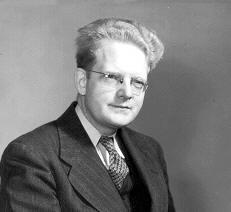
Northrop Frye
Northrop Frye

Northrop Frye was a Canadian literary critic and literary theorist, renowned for his extensive work on the Bible, mythology, and the literary imagination. His theories have had a significant impact on the field of literary criticism and have influenced many scholars and critics. more

You May Also Like

“It's through the cross that we reach the resurrection. We should be absolutely sure of this truth, and we should keep this cross hidden and not place it on the shoulders of others. It is our cross we have to carry. It is the one God has given us to go through into His resurrection. This is the one we should keep hidden. But there are crosses and crosses, some of our own making. These we should immediately discard. Some permitted by God for our sanctification. These we can share for they are also for the sanctification of others. True, we can help to carry other people's crosses and they can help to carry our crosses, but the operative word is "hidden." The Lord said, "So when you give to the needy, do not announce it with trumpets as the hypocrites do in the synagogues and on the streets, to be honoured by men," and "When you fast, put oil on your head and wash your face, so that it will not be obvious to men that you are fasting, but only to your Father, who is unseen; and your Father, who sees what is done in secret, will reward you." (Mt 6:16-18) Our very hiddenness becomes a light if we do not complain, if we carry our cross manfully, ready to help in the carrying of other people's crosses. Then we become a light to our neighbour's feet because we become an icon of Christ—shining!”

“I'd be willing to bet that the notion of the end of time is more common today in the secular world than in the Christian. The Christian world makes it the object of meditation, but acts as if it may be projected into a dimension not measured by calendars. The secular world pretends to ignore the end of time, but is fundamentally obsessed by it. This is not a paradox, but a repetition of what transpired in the first thousand years of history. ... I will remind readers that the idea of the end of time comes out of one of the most ambiguous passages of John's text, chapter 20... This approach, which isn't only Augustine's but also the Church Fathers' as a whole, casts History as a journey forward—a notion alien to the pagan world. Even Hegel and Marx are indebted to this fundamental idea, which Pierre Teilhard de Chardin pursued. Christianity invented History, and it is in fact a modern incarnation of the Antichrist that denounces History as a disease. It's possible that secular historicism has understood history as infinitely perfectible—so that tomorrow we improve upon today, always and without reservation... But the entire secular world is not of the ideological view that through history we understand how to look at the regression and folly of history itself. There is, nonetheless, an originally Christian view of history whenever the signpost of Hope on this road is followed. The simple knowledge of how to judge history and its horrors is fundamentally Christian, whether the speaker is Emmanuel Mounier on tragic optimism or Gramsci on pessimism of reason and optimism of will.”

“Consider the enormity of the problem. Science has proved that the universe exploded into being at a certain moment. It asks: What cause produced this effect? Who or what put the matter or energy into the universe? And science cannot answer these questions, because, according to the astronomers, in the first moments of its existence the Universe was compressed to an extraordinary degree, and consumed by the heat of a fire beyond human imagination. The shock of that instant must have destroyed every particle of evidence that could have yielded a clue to the cause of the great explosion.”

“Another version of the “Prosperity Gospel” or “Name It and Claim It” teaching has to do with finding a verse in the Bible and then “claiming” that verse. Proponents of this thinking believe that God must fulfill his promise to us in whatever verse we are “claiming” because what God says in his Word, the Bible, is true, and we can trust it to be true. So someone might pray: God, your Word says in Isaiah that by your stripes we are healed and I know you are not a liar and that your Word is true and I claim that Scripture in Jesus’s name and therefore I will be healed of this stomachache! We need to have faith in what the Bible says, but we have to be careful that we aren’t trying to force God to do what we want. That is arrogance rather than humility.God loves us, but we cannot demand things of him as though our faith is in charge rather than God. If someone believes it is our faith that heals us and forgets that it is God who does it, we should ask that person how much faith Lazarus had. Remember, he was decomposing in a tomb when Jesus raised him from death. His faith obviously didn’t matter. It was all God. It is God and God’s grace that heals, not our prayers and not our “faith.” Though we are exhorted by God to pray to him, we cannot compel him to do what we wish.”

“The Offices rerooted me in a tradition where, monk or not, I would always be at home. From long ago I knew the power of their repetition, the incantatory force of the Psalms. But they had an added power now. As a kid, the psalmist (or psalmists) had seemed remote to me, the Psalms long prayers which sometimes rose to great poetry but often had simply to be endured. For a middle-aged man, the psalmists' moods and feelings came alive. One of the voices sounded a lot like a modern New Yorker, me or people I knew: a manic-depressive type A personality sometimes up, more often down, sometimes resigned, more often pissed off, railing about his sneaky enemies and feckless friends, always bitching to the Lord about the rotten hand he'd been dealt. That good old changelessness.”