Quotessence
Home / Quotes / Quote by Elizabeth Strout

Quote by Elizabeth Strout

“Inside the music like this, she understood many things. She understood that Simon was a disappointed man if he needed, at this age, to tell her he had pitied her for years. She understood that as he drove his car back down the coast toward Boston, toward his wife with whom he had raised three children, that something in him would be satisfied to have witnessed her the way he had tonight, and she understood that this form of comfort was true for many people, as it made Malcolm feel better to call Walter Dalton a pathetic fairy, but it was thin milk, this form of nourishment; it could not change that you had wanted to be a concert pianist and ended up a real estate lawyer, that you had married a woman and stayed married to her for thirty years, when she did not ever find you lovely in bed.”

Quote by Elizabeth Strout

Work

Olive Kitteridge

This book delves into the intricacies of Olive Kitteridge's relationships and experiences, offering a poignant and insightful look at the human condition through the lens of a single character. more

Author
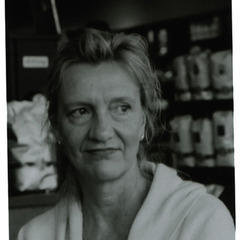
Elizabeth Strout
Elizabeth Strout

Elizabeth Strout (born January 6, 1956) is an acclaimed American author known for her nuanced portrayals of small-town life and human complexity. Born in Portland, Maine, she grew up in a literary family. Strout won the Pulitzer Prize for Fiction in 2009 for her novel 'Olive Kitteridge,' which was adapted into an award-winning HBO miniseries. Her other notable works include 'Amy and Isabelle,' 'The Burgess Boys,' and 'Anything Is Possible.' Strout's writing often explores themes of loneliness, family, love, and loss through the lives of ordinary people. She is praised for her concise yet powerful prose and deep psychological insight. Her works have been translated into multiple languages and have a global readership. more

You May Also Like

“I am getting tired of feeling disappointed. I am getting tired of other people trying to always take my kindness for weakness, I sure don't deserve it. I should assume responsibility and become cold to others and warm to myself. Some call it self loving, other selfishness... I call it respect. Why to give less that what is being given? Maybe I am way too much for you, maybe that is your biggest fear, to feel less.”

“Ah, I believe Schacht. Only too willingly; that’s to say, I think what he says is absolutely true, for the world is incomprehensibly crass, tyrannical, moody, and cruel to sickly and sensitive people. Well, Schacht will stay here for the time being. We laughed at him a bit, when he arrived, that can’t be helped either, Schacht is young and after all can’t be allowed to think there are special degrees, advantages, methods, and considerations for him. He has now had his first disappointment, and I’m convinced that he’ll have twenty disappointments, one after the other. Life with its savage laws is in any case for certain people a succession of discouragements and terrifying bad impressions. People like Schacht are born to feel and suffer a continuous sense of aversion. He would like to admit and welcome things, but he just can’t. Hardness and lack of compassion strike him with tenfold force, he just feels them more acutely. Poor Schacht. He’s a child and he should be able to revel in melodies and bed himself in kind, soft, carefree things. For him there should be secret splashings and birdsong. Pale and delicate evening clouds should waft him away in the kingdom of Ah, What’s Happening to Me? His hands are made for light gestures, not for work. Before him breezes should blow, and behind him sweet, friendly voices should be whispering. His eyes should be allowed to remain blissfully closed, and Schacht should be allowed to go quietly to sleep again, after being wakened in the morning in the warm, sensuous cushions. For him there is, at root, no proper activity, for every activity is for him, the way he is, improper, unnatural, and unsuitable. Compared with Schacht I’m the trueblue rawboned laborer. Ah, he’ll be crushed, and one day he’ll die in a hospital. or he’ll perish, ruined in body and soul, inside one of our modern prisons.”