Quotessence
Home / Quotes / Quote by Pablo Tusset

Quote by Pablo Tusset

“To say "all that which does not exist" is to introduce, effectively, a new concept, but it does not bring into existence anything more than that very concept which it introduces. That is, a certain entity about which we know nothing except that it bears the name of "all that which does not exist.”

Quote by Pablo Tusset

Work

The Best Thing That Can Happen to a Croissant

Browse quotes and source details for this work. more

Author
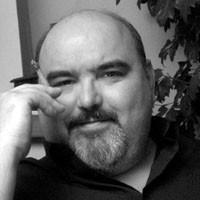
Pablo Tusset
Pablo Tusset

Pablo Tusset, born in 1965, is a renowned Mexican writer known for his unique narrative style and profound insights into social realities. more

You May Also Like

“The troops and their ladies had first drunk champagne. There were also remains of sandwiches, and I stepped on one, which I think was either cucumber or watercress. I scraped it off on the curbing, left it there for germs. I'll tell you this, though: No germ is going to leave the Solar System eating sissy stuff like that. Plutonium! Now there's the stuff to put hair on a microbe's chest.”

“We've got a form of brainwashing going on in our country," Morrie sighed. "Do you know how they brainwash people? They repeat something over and over. And that's what we do in this country. Owning tings is good. More money is good. More property is good. More commercialism is good. More is good. More is good. We repeat it-and have it repeated to us-over and over until nobody bothers to even think otherwise. The average person is to fogged up by all this, he has no perspective on what's really important anymore.”

“Beauty is the only human aspect which cannot be captured on any canvas howsoever hard an artist tries. At the most, the undaunted artist can replicate the beauty on paper but what is a replica in comparison to the original! The humbling resemblance can only be respected, not truly adored. Beauty cannot be imprisoned in the lens of a camera. The images of beauty are a moment of its essence. Beauty cannot be displayed to evoke pleasure for all on a cinema screen. Those are just its imprints, mere illusions of its existence. Beauty cannot be described by words; it cannot be written or read about. There are no suitable words in all the languages of the world, ancient or modern to hold it between a paper and a pen or a script and an eye. Beauty can only be experienced from far, its delightful aroma can only be tasted through one’s eyes and its pleasurable sight can only be felt from the soul. Beauty can only be best described at its origin through a befuddling silence, the kind that leaves one almost on the verge of a pleasurable death, just because one chooses beauty over life. There is nothing in this world to hold something so pure, so divine except a loving heart. And it is the only manner through which love recognises love; the language of love has no alphabet, no words.”

“Pain, of course, is intimately linked with fear. “Fear isolates,” writes Rivera Garza. “Fear teaches us to distrust. Fear makes us crazy.” If we follow the arc of her argument, we see that pain has the power to destroy and to produce its own reality, a reality in turn legitimized and given further meaning through the politics and policies that shape our society. This reality is quite often a reality of fear, a reality that makes us—individually and as a society—crazy, isolated, filled with distrust for our fellow human beings, the people who share our neighborhoods, our cities, our country, our borders, our intractably and intimately interwoven global community—the people with whom we share our very lives.”

“Tish senses. Even as the world tries to speed by her, she is slowly taking it in. Wait, stop. That thing you said about the polar bears…it made me feel something and wonder something. Can we stay there for a moment? I have feelings. I have questions. I’m not ready to run outside to recess yet. In most cultures, folks like Tish are identified early, set apart as shamans, medicine people, poets, and clergy. They are considered eccentric but critical to the survival of the group because they are able to hear things others don’t hear and see things others don’t see and feel things others don’t feel. The culture depends on the sensitivity of a few, because nothing can be healed if it’s not sensed first. But our society is so hell-bent on expansion, power, and efficiency at all costs that the folks like Tish—like me—are inconvenient. We slow the world down. We’re on the bow of the Titanic, pointing, crying out, “Iceberg! Iceberg!” while everyone else is below deck, yelling back, “We just want to keep dancing!” It is easier to call us broken and dismiss us than to consider that we are responding appropriately to a broken world. My little girl is not broken. She is a prophet. I want to be wise enough to stop with her, ask her what she feels, and listen to what she knows.”

“What I miss most from home is shopping. It sounds a bit silly, I know. If ever I couldn’t grasp that something was happening, like when I got the job here and departure time was coming up, I’d go out and buy stuff in preparation for it, and in that way I understood it was for real. I understood impending events through shopping. I understood the circumstances through the items that characterized them. Shopping had a kind of numbing effect on me, and now that it’s no longer something I do, I’ve started having thoughts and feelings that have turned out to be sad.”