Quotessence
Home / Quotes / Quote by Samuel Taylor Coleridge

Quote by Samuel Taylor Coleridge

“That Nature ne'er deserts the wise and pure; No plot so narrow, be but Nature there, No waste so vacant, but may well employ Each faculty of sense, and keep the heart Awake to Love and Beauty! and sometimes 'Tis well to be bereft of promis'd good, That we may lift the soul, and contemplate With lively joy the joys we cannot share.”

Quote by Samuel Taylor Coleridge

Work

Samuel Taylor Coleridge

This book encompasses a wide range of writings by Samuel Taylor Coleridge, showcasing his contributions to English literature and philosophy. It includes his celebrated poems such as 'The Rime of the Ancient Mariner' and 'Kubla Khan', as well as his philosophical treatises on topics like the imagination and the nature of the mind. more

Author
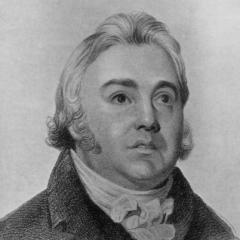
Samuel Taylor Coleridge

Samuel Taylor Coleridge was an English poet, critic, and philosopher, renowned for his works such as 'The Rime of the Ancient Mariner' and 'Kubla Khan'. A leading figure in the Romantic movement, his work has had a significant impact on English literature. more

You May Also Like

“Tears The first woman who ever wept was appalled at what stung her eyes and ran down her cheeks. Saltwater. Seawater. How was it possible? Hadn't she and the man spent many days moving upland to where the grass flourished, where the stream quenched their thirst with sweet water? How could she have carried these sea drops as if they were precious seeds; where could she have stowed them? She looked at the watchful gazelles and the heavy-lidded frogs; she looked at glass-eyed birds and nervous, black-eyed mice. None of them wept, not even the fish that dripped in her hands when she caught them. Not even the man. Only she carried the sea inside her body.”

“At that moment the universe appeared to me a vast machine constructed only to produce evil. I almost doubted the goodness of God, in not annihilating man on the day he first sinned. "The world should have been destroyed," I said, "crushed as I crush this reptile which has done nothing in its life but render all that it touches as disgusting as itself." I had scarcely removed my foot from the poor insect when, like a censoring angel sent from heaven, there came fluttering through the trees a butterfly with large wings of lustrous gold and purple. It shone but a moment before my eyes; then, rising among the leaves, it vanished into the height of the azure vault. I was mute, but an inner voice said to me, "Let not the creature judge his Creator; here is a symbol of the world to come. As the ugly caterpillar is the origin of the splendid butterfly, so this globe is the embryo of a new heaven and a new earth whose poorest beauty will infinitely exceed your mortal imagination. And when you see the magnificent result of that which seems so base to you now, how you will scorn your blind presumption, in accusing Omniscience for not having made nature perish in her infancy. God is the god of justice and mercy; then surely, every grief that he inflicts on his creatures, be they human or animal, rational or irrational, every suffering of our unhappy nature is only a seed of that divine harvest which will be gathered when, Sin having spent its last drop of venom, Death having launched its final shaft, both will perish on the pyre of a universe in flames and leave their ancient victims to an eternal empire of happiness and glory.”