Quotessence
Home / Quotes / Quote by Walter Scott

Quote by Walter Scott

“... those who were intrusted with the command of the troops of the Republic in battle, were wont to resume the shepherd's staff when they laid down the truncheon, and, like the Roman dictators, to retire to complete equality with their fellow-citizens, from the eminence of military command to which their talents, and the call of their country, had raised them.”

Quote by Walter Scott

Work

Anne of Geierstein

Browse quotes and source details for this work. more

Author

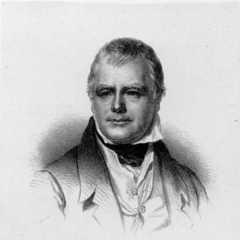
Walter Scott
Walter Scott

Walter Scott, born on August 15, 1771, and died on September 21, 1832, was a renowned British baronet. He is best known for his extensive literary works, particularly his historical novels and poetry. more

You May Also Like

“Kollontai stumbles upon the essence of sexual liberation as a form of control; it is “voluntary incarceration.” Because the will is more important than reason to the revolutionary, because in effect will is the essence of reason for both the Marxist and the Nietzschean, the revolutionary is unable to see how he is enslaved by his own will because he is unable to see the role that passion plays in that self-subversion. All the revolutionary can see is his passion, and because his only thought is how to gratify those passions - morals having discredited as “bourgeois” - he is blind to how his passions control him.”

“З чорного чернігівського бору вони вийшли на низький берег Дніпра. Перед ними за Дніпром зʼявилась чарівнича, невимовно чудова панорама Києва. На високих горах скрізь стояли церкви, дзвіниці, неначе свічі палали проти ясного сонця золотими верхами. Саме проти їх стояла лавра, обведена білими високими мурованими стінами та будинками, й лисніла золотими верхами й хрестами, наче букет золотих квіток. Коло лаври ховались у долинах між горами пещери з своїми церквами, між хмарами садків та винограду. А там далі, на північ, на високому шпилі стояла церква Св. Андрея, вирізуючись всіма лініями на синьому небі: коло неї Михайлівське, Софія, Десятинна... Поділ, вганяючись рогом в Дніпро, неначе плавав на синій, прозорій воді з своїми церквами й будинками. Всі гори були ніби зумисне заквітчані зеленими садками й букетами золотоверхих церков. Їх заквітчала давня невмираюча українська історія, неначе рукою якогось великого артиста...”

“In early Soviet times, when Kharkiv was the capital of the Ukranian Soviet Socialist Republic, Moscow's policy of korenizatsiia - 'nativisation' - prompted a brief flourishing of a Ukrainian avant-garde, paywrights and poets and journalists attracted to this bustling city of industrial and trading fame, allowed to write in their own language at last. The policy was the Bolsheviks' attempt to endear this restive republic, and the others, to their rule. In this political environment, writers were elevated. This special treatment came, however, came with the heavy caveat of state control which was followed by repression - a story familiar across the Soviet Union. But in Kharkiv the axe fell quicker. Stalin grew tired of korenizatsiia and opted to wipe out the native intelligentsia instead. In the early 1930s, the party line shifted abruptly; Ukrainian 'bourgeois nationalism' was the new enemy. The purges began. The Soviet Union under Stalin's paranoid control regressed to Tsarist ways. Russification and centralisation, brutal orders issued by Moscow and carried out by its secret police.”

“later i sat in the mosque balcony as the sun rose, watching while it unpicked the dark and misty folds of the forest and coloured the Bashgul river. We were all overcome by the fabulous richness of the landscape, the opulence of the wooden architecture, the yellow green coombes of ripening corn, the glistening trees.”