Quotessence
Home / Quotes / Quote by Jean Baudrillard

Quote by Jean Baudrillard

“We are, in effect, persisting in the increasingly sophisticated deconstruction of a world which can no longer secrete its end. So everything is able to go on to infinity. We no longer have the means to stop the processes which now run on without us, beyond reality, so to speak, in an endless speculation, an exponential acceleration. But do so, as a result, in an indifference which is also exponential. `Sans fin' -- without end -- equals `sans faim' -- without hunger: it is a kind of anorexic history which no longer feeds on real happenings, and wears itself out in counting down. A history without desire, without passion, without tension, without real events, where the problem is no longer one of changing life, which was the maximal utopia, but of surviving, which is the minimal utopia.”

Quote by Jean Baudrillard

Work

The Perfect Crime

Browse quotes and source details for this work. more

Author
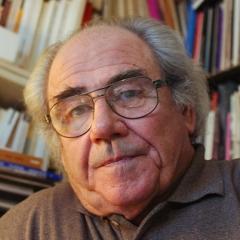
Jean Baudrillard
Jean Baudrillard

Jean Baudrillard was a French philosopher known for his critical studies on consumerism, media, and semiotics. His theories have had a profound impact on postmodernism and cultural studies. more

You May Also Like

“Thus, for example, the idea of progress has disappeared, yet progress continues. The idea of wealth that production once connoted has disappeared, yet production itself continues more vigorously than ever. Indeed, it picks up speed precisely in proportion to its increasing indifference to its original aims. Of the political sphere one can say that the idea of politics has disappeared but that the game of politics continues in secret indifference to its own stakes. Of television, that it operates in total indifference to its own images (it would not be affected, in other words, even were mankind to disappear). Could it be that all systems, all individuals, harbour a secret urge to be rid of their ideas, of their own essences, so as to be able to proliferate everywhere, to transport themselves simultaneously to every point of the compass? In any event, the consequences of a dissociation of this kind can only be fatal. A thing which has lost its idea is like the man who has lost his shadow, and it must either fall under the sway of madness or perish.”

“But the end of history is not the last word on history. For, against this background of perpetual non-events, there looms another species of event. Ruptural events, unforeseeable events, unclassifiable in terms of history, outside of historical reason, events which occur against their own image, against their own simulacrum. Events that break the tedious sequence of current events as relayed by the media, but which are not, for all that, a reappearance of history or a Real irrupting in the heart of the Virtual (as has been said of 11 September). They do not constitute events in history, but beyond history, beyond its end; they constitute events in a system that has put an end to history. They are the internal convulsion of history. And, as a result, they appear inspired by some power of evil, appear no longer the bearers of a constructive disorder, but of an absolute disorder. Indecipherable in their singularity, they are the equivalent in excess of a system that is itself indecipherable in its extension and its headlong charge.”

“Digital Pantheism implies omniversal ocean of pure, vibrant consciousness in motion, self-referential creative divine force expressing oneself in various forms and patterns. 'I am' the Alpha, Theta & Omega - the ultimate self-causation, self-reflection and self-manifestation instantiated by mathematical codes and fractal geometry.”

“When describing nature, a writer should seize upon small details, arranging them so that the reader will see an image in his mind after he closes his eyes. For instance: you will capture the truth of a moonlit night if you'll write that a gleam like starlight shone from the pieces of a broken bottle, and then the dark, plump shadow of a dog or wolf appeared. You will bring life to nature only if you don't shrink from similes that liken its activities to those of humankind." (Letter to Alexander Chekhov, May 10, 1886)”