Quotessence
Home / Quotes / Quote by Reginald Hill

Quote by Reginald Hill

“So what to do? . . . She shook her head impatiently. Choice is a largely delusional concept, her tutor used to say. Whether in politics, morals or shopping, we have far less than we imagine. In the end what we have to do often doesn't even figure on our list of pseudo-options.”

Quote by Reginald Hill

Author
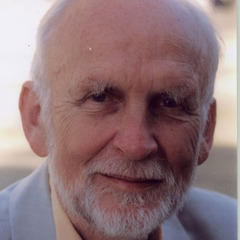
Reginald Hill
Reginald Hill

Reginald Hill was a British writer renowned for his crime novels. His works often set in the north of England, delving into social issues and the complexities of human nature. more

You May Also Like

“Four years ago, about 4,900 ninth grades began their high school career in the Boston Public schools. Today there are about 3,400 twelth graders. Nearly one third -- 1500 students -- have dropped out of the class in three and a half years. Almost half of the group that hopes to graduate (1,648) in six months' time has not passed the required standardized test (MCAS).”

“Before I go on with this short history, let me make a general observation– the test of a first-rate intelligence is the ability to hold two opposed ideas in the mind at the same time, and still retain the ability to function. One should, for example, be able to see that things are hopeless and yet be determined to make them otherwise. This philosophy fitted on to my early adult life, when I saw the improbable, the implausible, often the "impossible," come true.”

“It really is more natural to believe a preternatural story, that deals with things we don’t understand, than a natural story that contradicts things we do understand. Tell me that the great Mr Gladstone, in his last hours, was haunted by the ghost of Parnell, and I will be agnostic about it. But tell me that Mr Gladstone, when first presented to Queen Victoria, wore his hat in her drawing-room and slapped her on the back and offered her a cigar, and I am not agnostic at all. That is not impossible; it’s only incredible. But I’m much more certain it didn’t happen than that Parnell’s ghost didn’t appear; because it violates the laws of the world I do understand.”

“It’s what I call common sense, properly understood,’ replied Father Brown. ’It really is more natural to believe a preternatural story, that deals with things we don’t understand, than a natural story that contradicts things we do understand. Tell me that the great Mr Gladstone, in his last hours, was haunted by the ghost of Parnell, and I will be agnostic about it. But tell me that Mr Gladstone, when first presented to Queen Victoria, wore his hat in her drawing-room and slapped her on the back and offered her a cigar, and I am not agnostic at all. That is not impossible; it’s only incredible. But I’m much more certain it didn’t happen than that Parnell’s ghost didn’t appear; because it violates the laws of the world I do understand. So it is with that tale of the curse. It isn’t the legend that I disbelieve — it’s the history.”

“Debbie Nathan blames the early symptoms on pernicious anemia yet explains their supposed remission by Shirley’s being out of contact with Dr. Wilbur for those 9 years. But Dr. Wilbur never diagnosed a dissociative disorder in 1945. Nathan does not seem to recognize the implausibility of Dr. Wilbur creating via suggestion a complex dissociative disorder in five sessions, particularly when the doctor herself did not diagnose it. Nathan attributes Shirley’s postintegration improvement in functioning to being out of contact with Dr. Wilbur rather than to the therapy. But the pernicious anemia continued to be undiagnosed and untreated during that time period, so any symptoms due to it should have continued rather than showing an improvement that coincided with psychotherapy with Dr. Wilbur. Debbie Nathan’s thesis is self-contradictory.”