Quotessence
Home / Quotes / Quote by Annette Gordon-Reed

Quote by Annette Gordon-Reed

“Origin stories matter, for individuals, groups of people, and for nations. They inform our sense of self; telling us what kind of people we believe we are, what kind of nation we believe in. They usually carry, at least, a hope that where we started might hold the key to where we are in the present. We can say, then, that much of the concern with origin stories is about our current needs and desires (usually to feel good about ourselves), not actual history.”

Quote by Annette Gordon-Reed

Work

On Juneteenth

Browse quotes and source details for this work. more

Author

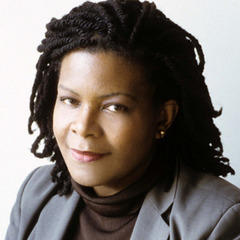
Annette Gordon-Reed
Annette Gordon-Reed

Annette Gordon-Reed is an American historian renowned for her research on slavery and race relations. Born on November 19, 1958, she graduated from Harvard University with a Ph.D. Her work, 'The Hemingses of Monticello: An American Family', which explores the complex relationship between Thomas Jefferson and his slave Sally Hemings, won the Pulitzer Prize for History. more

You May Also Like

“This historic general election, which showed that the British are well able to distinguish between patriotism and Toryism, brought Clement Attlee to the prime ministership. In the succeeding five years, Labor inaugurated the National Health Service, the first and boldest experiment in socialized medicine. It took into public ownership all the vital (and bankrupted) utilities of the coal, gas, electricity and railway industries. It even nibbled at the fiefdoms and baronies of private steel, air transport and trucking. It negotiated the long overdue independence of India. It did all this, in a country bled white by the World War and subject to all manner of unpopular rationing and controls, without losing a single midterm by-election (a standard not equaled by any government of any party since). And it was returned to office at the end of a crowded term.”

“That comes to about one hundred million people in India alone from 1947 to 1980. But we don’t call that a crime of democratic capitalism. If we were to carry out that calculation throughout the world… I wont even talk about it. But Sen is correct; they’re not intended, just like the Chinese famine wasn’t intended. But they are ideological and institutional crimes, and capitalist democracy and its advocates are responsible for them, in whatever sense supporters of so-called Communism are responsible for the Chinese famine. We don’t have the entire responsibility, but certainly a large part of it”

“The cunning villains used our innocence, naivety and honesty; they incited and steered our virtue, purity and fervent temperaments. When we realized the actual absurdity of the situation and began to demand our democratic rights, we were subjected to unprecedented persecution and suppression. Our youth, passion, learning, idealism and joy were all sacrificed to the terrible rule of this wicked tyranny. How can this not be blood?”

“But after living in Communist China for the past seventeen years, I knew that such a society was only a dream because those who seized power would invariably become the new ruling class. They would have the power to control the people’s lives and bend the people’s will. Because they controlled the production and distribution of goods and services in the name of the state, they would also enjoy material luxuries beyond the reach of the common people. In Communist China, details of the private lives of the leaders were guarded as state secrets. But every Chinese knew that the Party leaders lived in spacious mansions with many servants, obtained their provisions from special shops where luxury goods were made available to their household at nominal prices, and send their children in chauffeur-driven cars to exclusive schools to be taught by specially selected teachers. Even though every Chinese knew how these leaders lived, no one dared to talk about it. If we had to pass by a special shop for the military or high officials, we carefully looked the other way to avoid giving the impression we knew it was there.”