Quotessence
Home / Quotes / Quote by Charles Dickens

Quote by Charles Dickens

“Nel piccolo mondo in cui i bambini vivono la loro esistenza, chiunque li allevi, non c'è nulla che venga percepito più acutamente dell'ingiustizia. Può darsi che sia solo una piccola ingiustizia quella che il bambino si trova a subire; ma il bambino è piccolo, e il suo mondo è piccolo, e il suo cavallino a dondolo è tante spanne più alto di lui quanto, in proporzione, un cavallo irlandese dalla grossa ossatura. Io, dentro di me, avevo sostenuto un perpetuo conflitto contro l'ingiustizia fin dalla prima infanzia.”

Quote by Charles Dickens

Work

Great Expectations

This novel follows the journey of Pip, a young boy who is raised by his sister and her husband, Joe Gargery, a blacksmith. After receiving a mysterious gift that leads him to believe he has been chosen for a better life, Pip embarks on a quest to fulfill his 'great expectations.' The story delves into Pip's interactions with various characters, including the wealthy Miss Havisham and her adopted daughter Estella, and the convict Magwitch, who ultimately reveals a profound connection to Pip's past. more
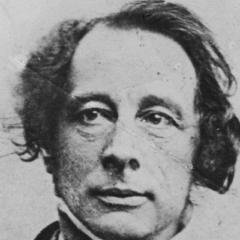
Author

Charles Dickens
Charles Dickens

Charles Dickens, a British writer born on February 7, 1812, and died on June 9, 1870, is one of the greatest novelists of the 19th century. Known for his profound social criticism and vivid narrative style, Dickens' works extensively cover social reality, revealing various issues in the British society of the time. more

You May Also Like

“Joshie has always told Post Human Services Staff to keep a diary, to remember who we were because every moment, our brains and synapses are being rebuilt and rewired with maddening disregard for our personalities, so that each year, each month, each day, we transfer into a different person, an utterly unfaithful iteration of our original selves, of the drooling kid in the sandbox. But not me. I am still a facsimile of my early childhood. I am still looking for a loving dad to lift me up and brush the sand off my ass and to hear English, calm and hurtless, fall off his lips.”

“THE LILIES This morning it was, on the pavement, When that smell hit me again And set the houses reeling. People passed like rain: (The way rain moves and advances over the hills) And it was hot, hot and dank, The smell like animals, strong, but sweet too. What was it? Something I had forgotten. I tried to remember, standing there, Sniffing the air on the pavement. Somehow I thought of flowers. Flowers! That bad smell! I looked: down lanes, past houses-- There, behind a hoarding, A rubbish-heap, soft and wet and rotten. Then I remembered: After the rain, on the farm, The vlei that was dry and paler than a stone Suddenly turned wet and green and warm. The green was a clash of music. Dry Africa became a swamp And swamp-birds with long beaks Went humming and flashing over the reeds And cicadas shrilling like a train. I took off my clothes and waded into the water. Under my feet first grass, then mud, Then all squelch and water to my waist. A faint iridescence of decay, The heat swimming over the creeks Where the lilies grew that I wanted: Great lilies, white, with pink streaks That stood to their necks in the water. Armfuls I gathered, working there all day. With the green scum closing round my waist, The little frogs about my legs, And jelly-trails of frog-spawn round the stems. Once I saw a snake, drowsing on a stone, Letting his coils trail into the water. I expect he was glad of rain too After nine moinths of being dry as bark. I don't know why I picked those lilies, Piling them on the grass in heaps, For after an hour they blackened, stank. When I left at dark, Red and sore and stupid from the heat, Happy as if I'd built a town, All over the grass were rank Soft, decaying heaps of lilies And the flies over them like black flies on meat...”

“He was a precocious and delicate little boy, quivering with the malaise of being unloved. When we played, his child's heart would come into its own, and the troubled world where his vague hungers went unfed and mothers and fathers were dim and far away--too far away to ever reach in and touch the sore place and make it heal--would disappear, along with the world where I was not sufficiently muscled or sufficiently gallant to earn my own regard.”