“I believe that scientific knowledge has fractal properties, that no matter how much we learn, whatever is left, however small it may seem, is just as infinitely complex as the whole was to start with. That, I think, is the secret of the Universe.”
Quote by Isaac Asimov
Author
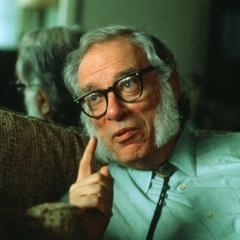
Isaac Asimov
Isaac Asimov, born on January 2, 1920 in Poland and died on April 6, 1992 in the United States, was a renowned American science fiction author, science writer, and literary critic, known as the 'Father of Science Fiction'. His works covered a wide range of science fiction themes, including robots, space exploration, and time travel, and had a profound impact on science fiction literature and the popularization of science. more
You May Also Like
“That which cures all worldly miseries, is called ‘Scientific’ Knowledge.”
Source: Leonardo's Mountain of Clams and the Diet of Worms: Essays on Natural History
“Humanity without science is fragile, science without humanity is lethal.”
Source: The Gentalist: There's No Social Work, Only Family Work
Source: Le Négationnisme économique. Et comment s'en débarrasser (ESSAIS)
Source: Vande Vasudhaivam: 100 Sonnets for Our Planetary Pueblo
“A scientist works to preserve life, Politician plays publicity with death.”
Source: Vande Vasudhaivam: 100 Sonnets for Our Planetary Pueblo
“Average scientists seek answers, Great scientist seeks questions.”
Source: Rowdy Scientist: Handbook of Humanitarian Science
Source: The Expanding Universe: Astronomy's 'Great Debate', 1900–1931 (Cambridge Science Classics)